Rigid telescoping boxes, magnetic boxes, sleeve-and-tray sets and folding cartons for earbuds, wearables, chargers and smart-home gear. Philips runs production with us.
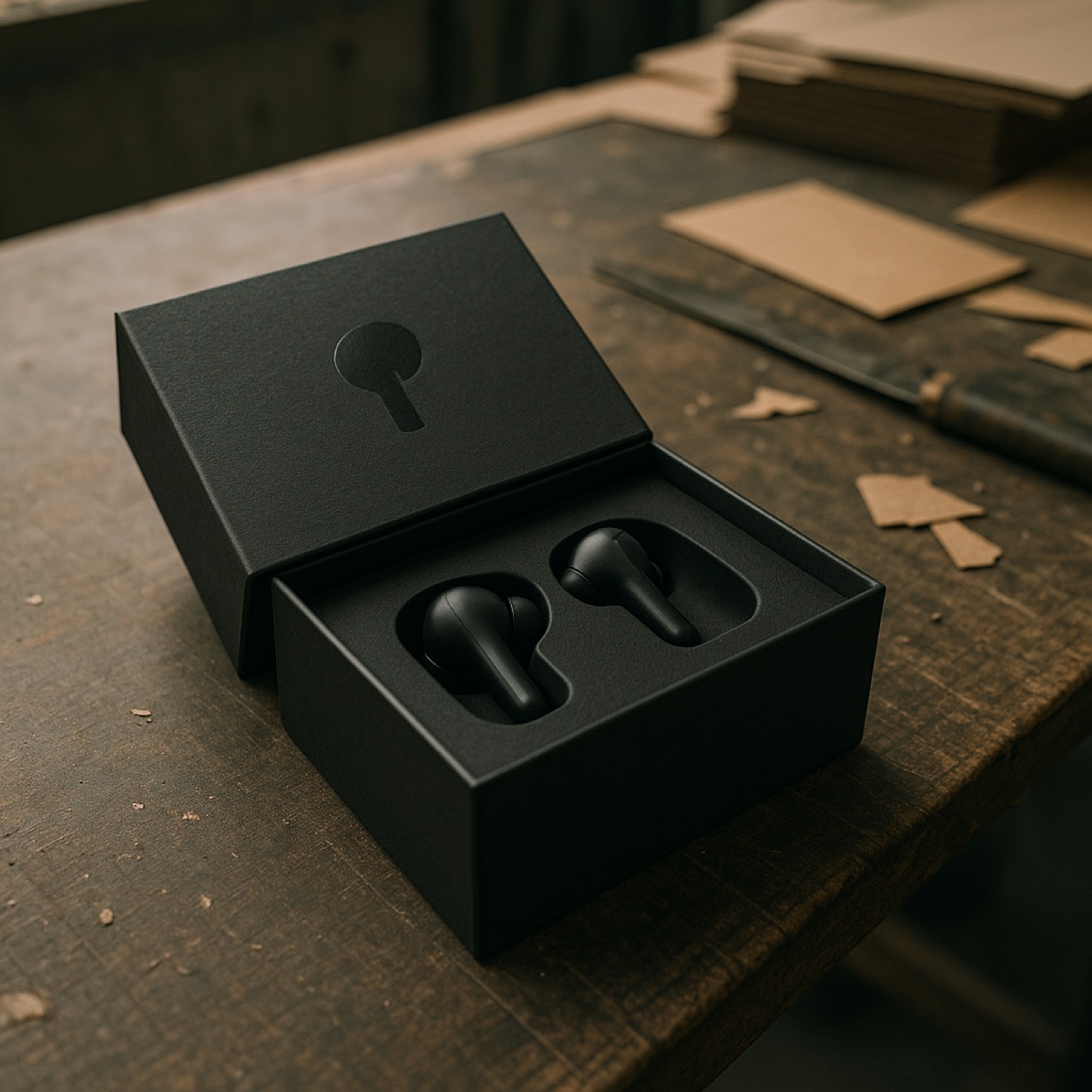
The C2 folding carton in the gallery below is a live Philips production run, printed and converted on our floor. Same line and same crew for every client.
Rigid telescoping two-piece, magnetic closure, sleeve and tray, folding carton and corrugated mailer, all converted under one roof.
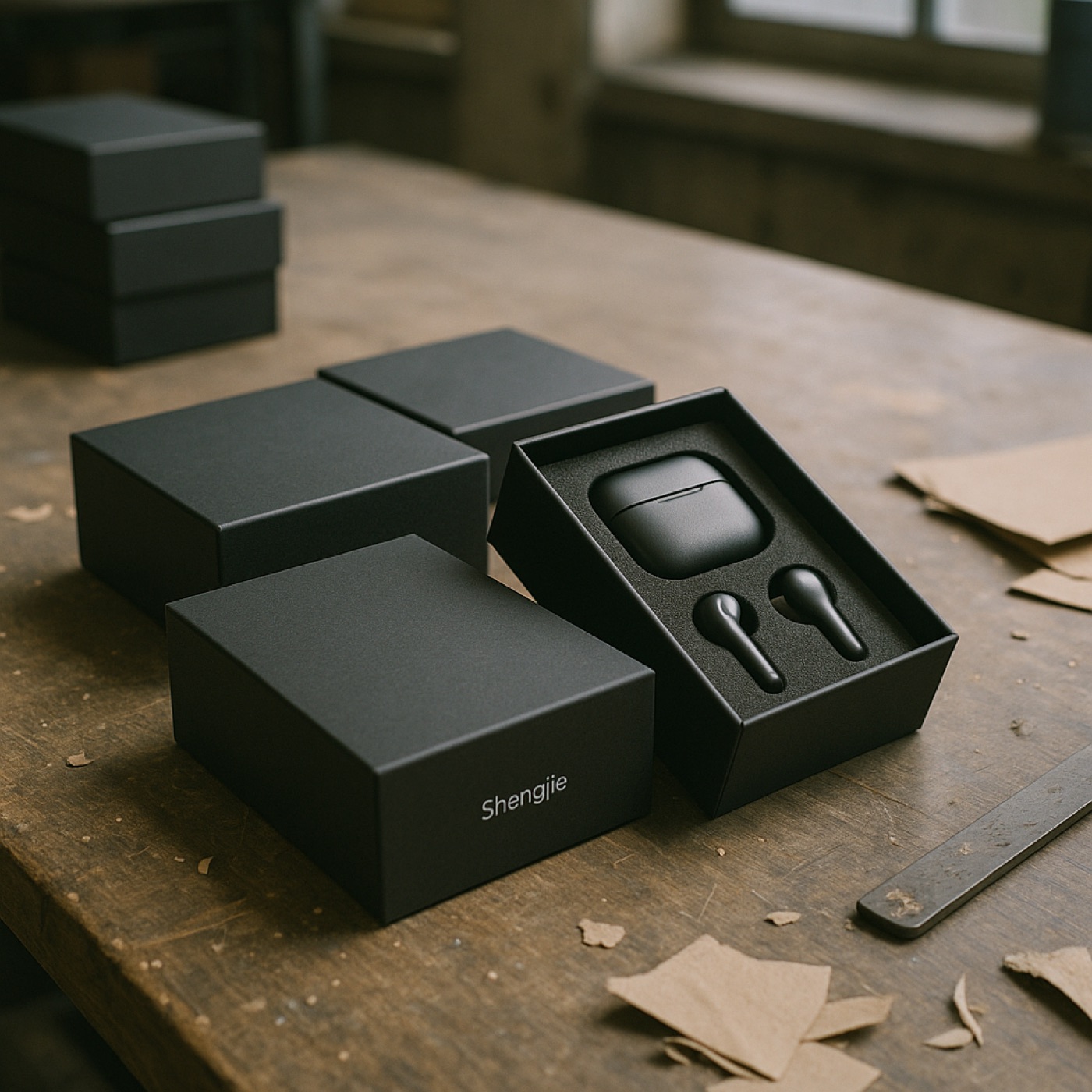
EVA, EPE, molded pulp and die-cut board cavities shaped to hold earbuds, chargers and cables without rattle.
Soft lining papers and flocked cavity surfaces where a glossy device face would otherwise pick up scuffs in transit.
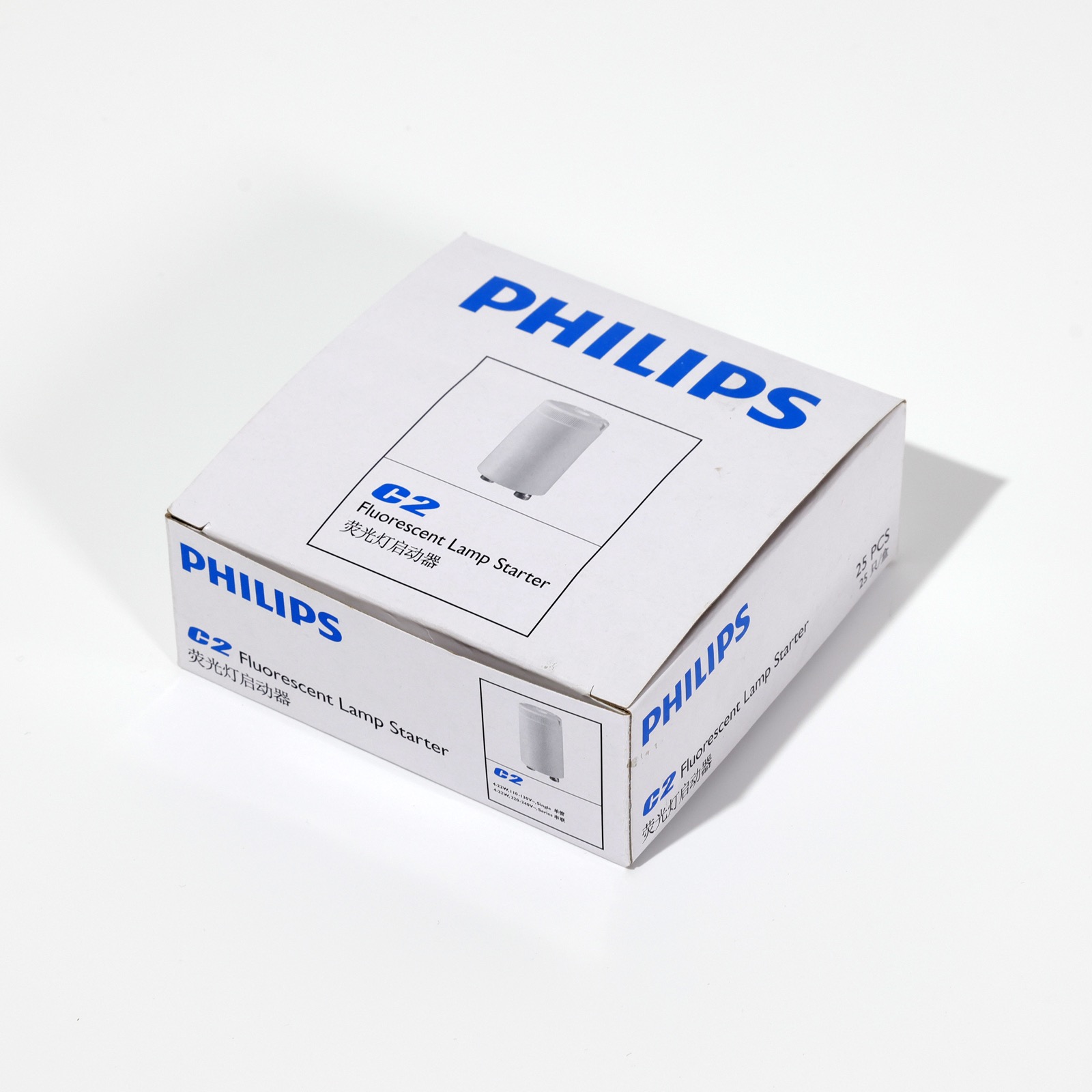
The category's visual language: deep matte lamination with a gloss UV logo hit. We also run hot foil, deboss and soft-touch.
Brands shipping ESD-sensitive devices reference ANSI/ESD S541, the packaging standard ESD-sensitive electronics reference. Shielding bags stay with your component suppliers. We build the retail box around your requirements.
Two-piece lid and base with friction-fit walls. Hidden air-release slots let the lid glide down instead of fighting trapped air. Full specs on our rigid box service page.
Hinged lid with concealed magnets over an insert tray. Structure options are covered in our magnetic closure box guide.
Printed outer sleeve over a drawer tray. A thumb notch or pull ribbon controls the reveal. A steady choice for cable sets and small accessories.
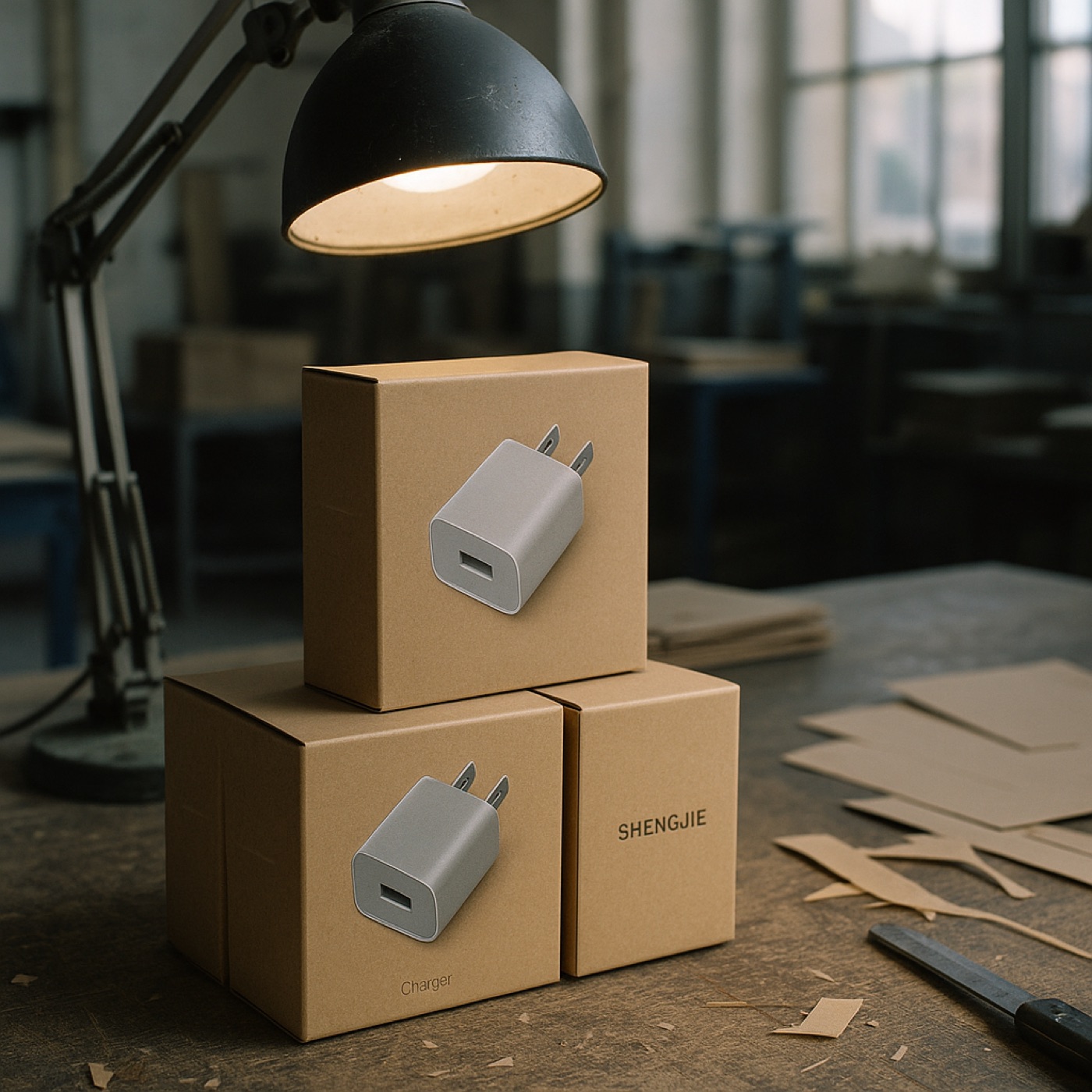
Litho-printed carton for accessories, chargers and retail pegs. This is the Philips format shown below. The lowest unit cost in the lineup.
E-flute mailers with interior print for DTC hardware shipping direct. Takes a die-cut board insert well.
Swing tags, warranty cards and quick-start cards printed to match the box. See card printing.
| Substrate | 200–400 gsm FBB, SBS and kraft board; art paper and specialty wraps over grey-board for rigid work. |
|---|---|
| Construction | Rigid set-up (1.5–3.0 mm grey-board), folding carton, E-flute corrugated mailer. |
| Print method | Sheet-fed offset up to 8 colors; digital for short runs and pre-production samples. |
| Finishing | Matte and soft-touch lamination, spot UV, hot foil, deboss, emboss. Matte black with spot UV is the standing request in this category. |
| Inserts | EVA (CNC or die-cut, optional flocking), EPE foam, molded pulp, die-cut board. Cable wells and paperwork compartments to spec. |
| MOQ | 500 units (rigid), 1,000 units (folding carton), 300 units (corrugated mailer). |
| Lead time | 12–25 days production plus transit, depending on insert tooling and finish count. |
| Friction fit | Lid drag is a spec, not an accident. Too loose reads cheap. Too tight tears the wrap. We tune board caliper and wrap thickness until the lid seats with even resistance on all four walls. |
|---|---|
| Air-release slots | A tightly fitted telescoping lid traps air and pistons open. Hidden slots bleed the air so the lid glides down slowly. It is the detail people remember from opening a phone box. |
| Presentation order | The device sits alone in the top layer. Cables, plugs and paperwork go in a compartment below or behind a printed divider card, so nothing competes with the first look. |
| Cable compartments | Die-cut wells and wrap-around channels keep cables coiled and away from the device face. An earphone packaging box lives or dies on how the case and the cable share the cavity. |
| Lining and flocking | Lining papers and flocked EVA protect glass and gloss surfaces from scuffing under transit vibration. Cheap insurance against the first review photo showing a scratch. |
A rigid shell of a given size costs about the same whichever factory folds it. Complexity lives in the insert. Decide the insert first and the rest of the quote settles. Here is how the four common options compare.
| Die-cut board | Cheapest option and quickest tooling. Best for flat products: cards, cables laid flat, chargers in cartons and mailers. Prints to match the interior. Least cushioning of the four. |
|---|---|
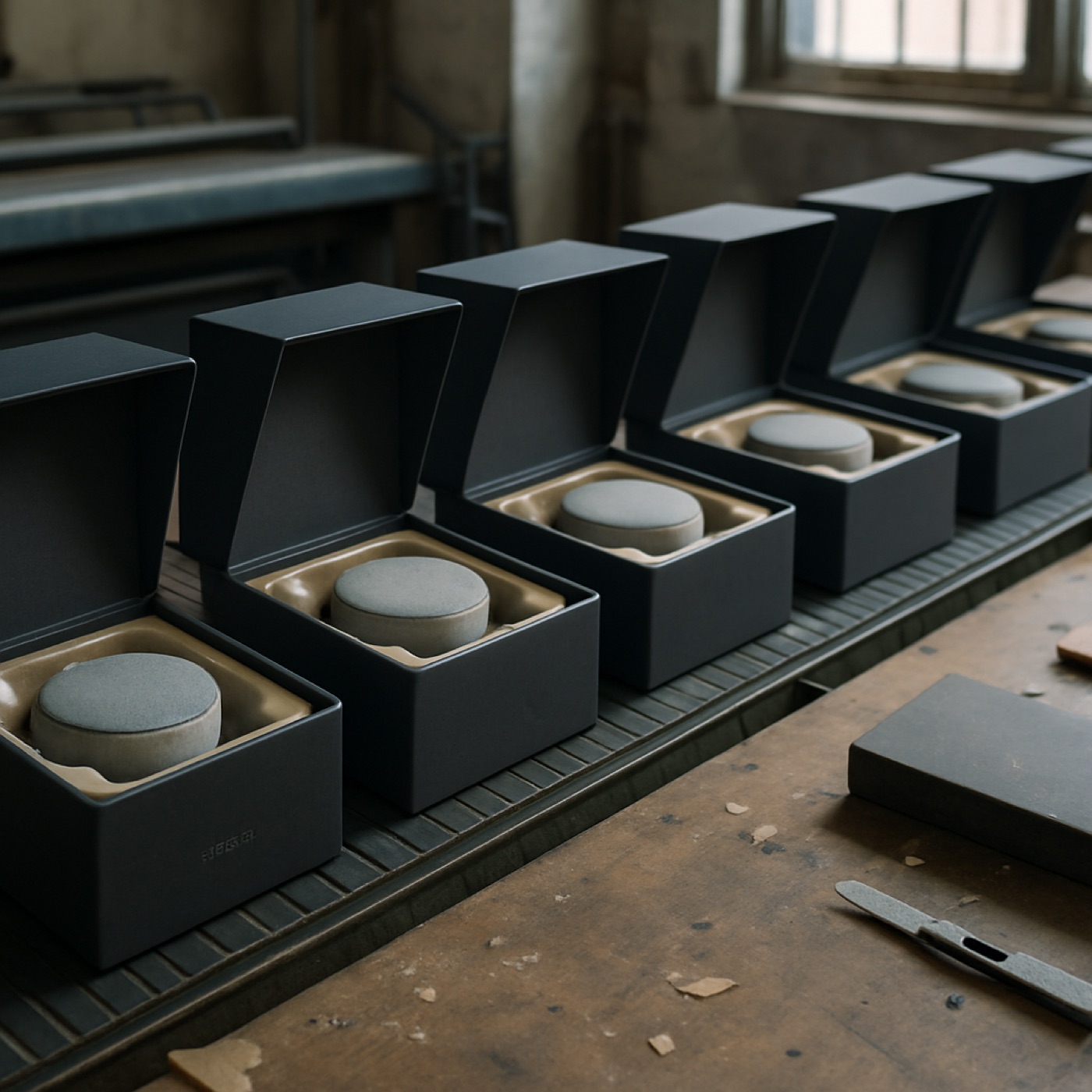
| Molded pulp | The eco story, and a good one for chargers and cable sets. Natural fiber look that suits kraft and uncoated wraps. Needs a one-time mold, and cavity tolerance runs looser than foam. |
| EPE foam | Light and low cost with decent protection. The surface reads utilitarian, so it works best hidden under a printed board layer rather than presented bare. |
| EVA foam | Dense and premium. Cavities cut by CNC or die, flocking optional. The default under earbuds and wearables. Highest insert cost of the four, and the one buyers photograph. |
Ballpark unit prices, 2026, ex-works, artwork ready. Size, board, foil coverage and insert complexity all move these numbers, so treat them as orientation, not an offer.
| 1,000 folding cartons | Accessory-size litho carton, around $0.30–0.60 per unit. |
|---|---|
| 1,000 rigid telescoping boxes | With a fitted EVA insert, around $1.60–2.90 per unit. |
| 500 magnetic boxes | With a molded pulp cradle, around $2.20–3.60 per unit. |
Want a number for your spec today? Build it in our Studio for an instant estimate, or send drawings through the quotation form for a factory-checked price.
Send device dimensions, a 3D file, or the device itself. We reply within one business day with structure options and a quotation.
Request a quoteYes, with a physical proof. Matte lamination shifts color, so we print the Pantone as a spot color on the wrap, laminate a drawdown, and adjust until the laminated sheet hits your target. On dark stock we lay a white or metallic underprint first. You approve a laminated sample before the run.
500 units. Below that, one-time costs for the cutting die and insert tooling dominate the unit price. Die-cut EVA and board inserts carry a modest one-time die charge. CNC-cut EVA needs no die at all, which helps on short runs and sampling.
Die-cut board and die-cut foam are cut in-house. Molded pulp and CNC EVA come from partner shops we have worked with for years, a short drive from the factory. Fitting and final assembly happen on our floor, so the box ships as one finished unit.
First a blank white sample to confirm size, structure and lid feel. Then a full pre-production sample with print, finish and insert, checked against your device. Sample fees are typically credited against the production order. Allow roughly a week per sampling round plus courier time.