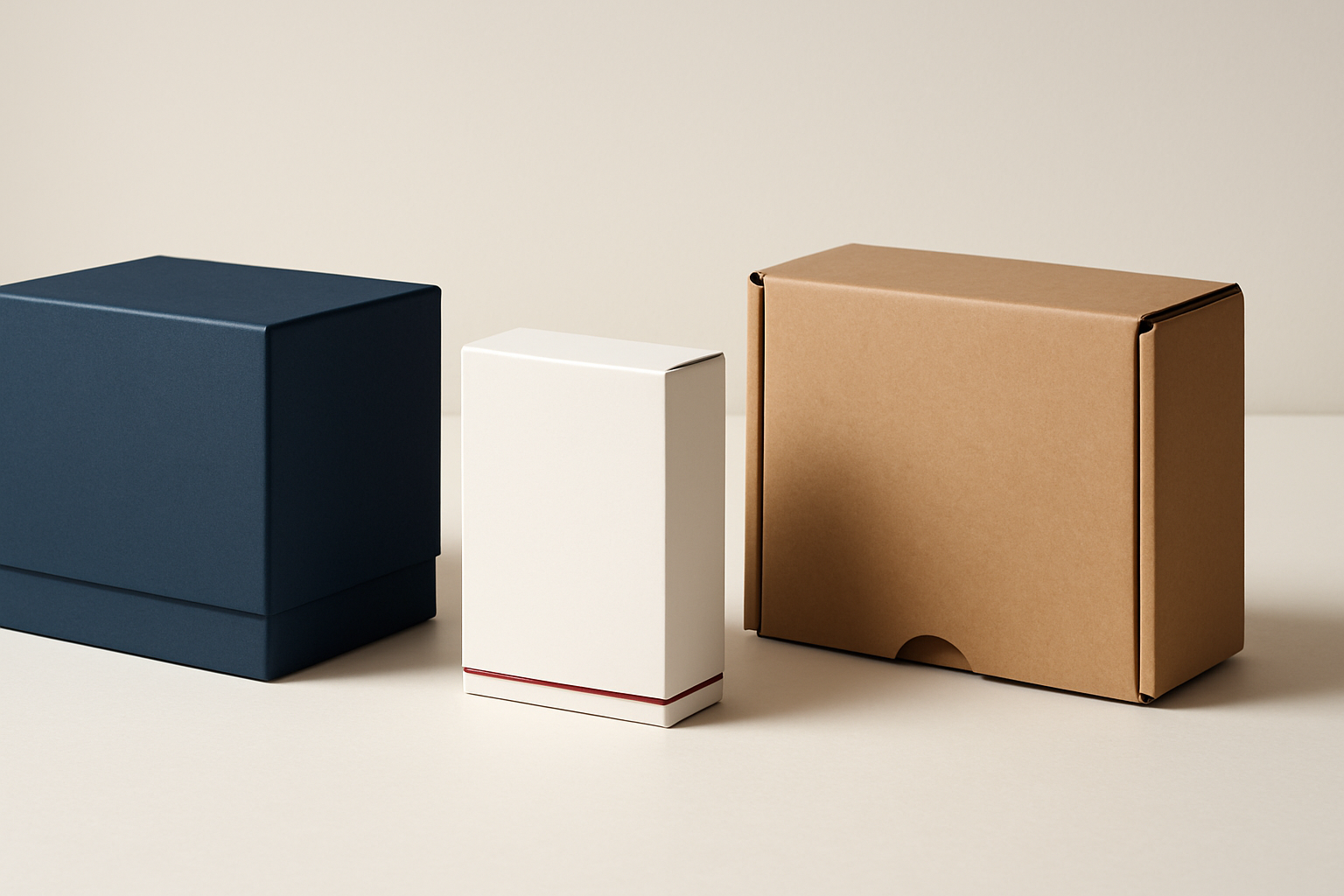
If you've been sourcing luxury packaging for any length of time, you already know that custom rigid boxes sit at the top of the hierarchy. They're not cheap, and they're not quick, but when a customer opens one, they feel it. As a Custom Rigid Box Printing factory based in Fuzhou, we've been building these things since 1976, and honestly, we still get a little proud when a finished run comes off the line correctly. This guide covers everything you need to know about sourcing custom rigid boxes from China.
Understanding Rigid Boxes
Rigid boxes, sometimes called set-up boxes, don't collapse. That's the point. Unlike folding cartons that get shipped flat and assembled later, a rigid box holds its shape permanently, which is exactly why brands selling electronics, cosmetics, and luxury goods reach for them. The structure communicates something to the end customer before they've even looked inside.
Materials We Use
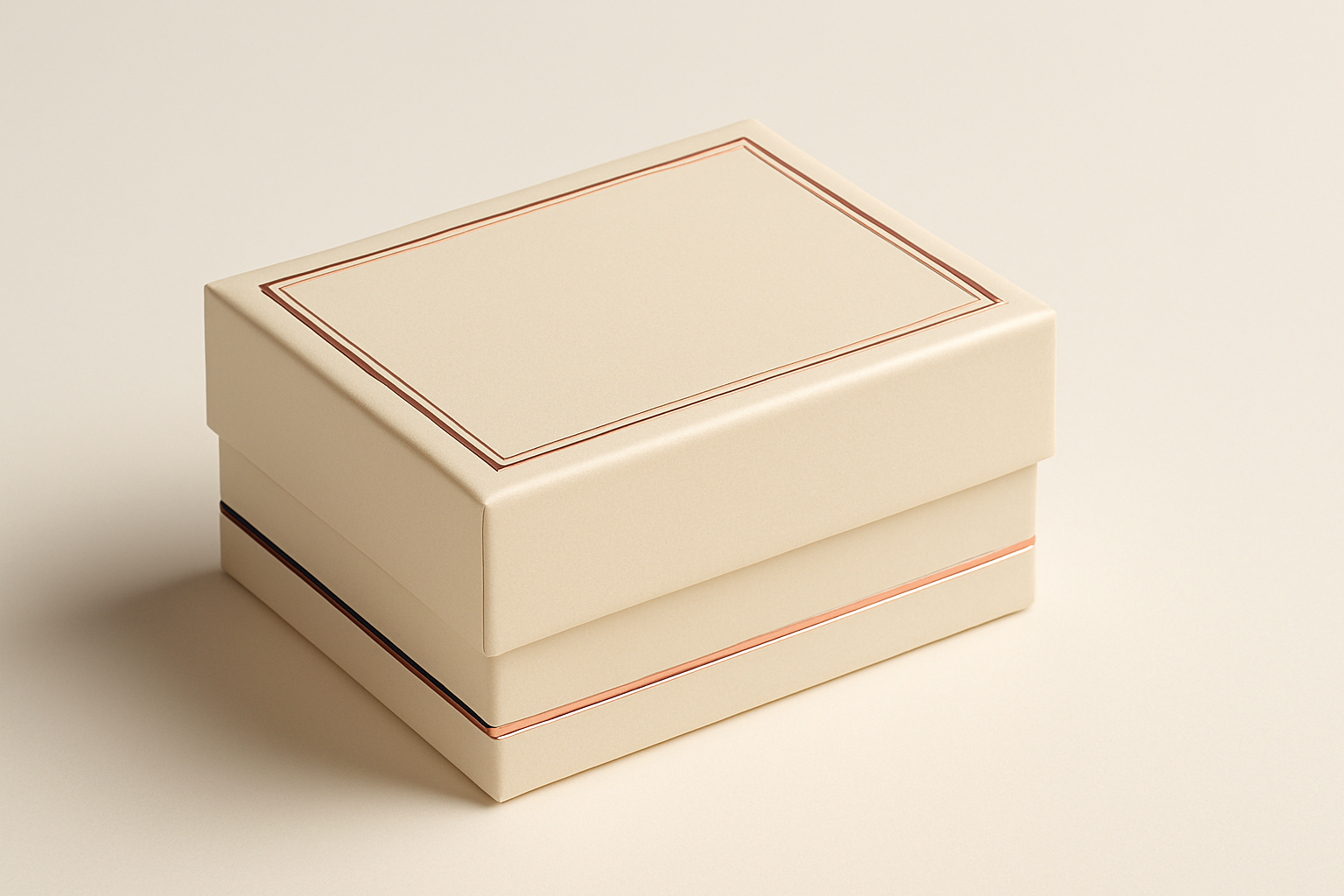
The core of a rigid box is 800gsm greyboard. That's what gives it the satisfying heft and the structural integrity you're paying for. We wrap that core in 350gsm coated art paper, which is where the customisation happens: foil stamping, soft-touch lamination, spot UV, you name it. All our greyboard and paper stocks are FSC-certified. In our experience, more and more buyers, especially those sourcing for European retail markets, are asking for that certification upfront, so we've made it standard rather than optional.
Printing Techniques
We run Heidelberg Speedmaster XL106 presses on the print floor. Sharp registration, consistent ink laydown, fast turnaround between jobs. We use Sun Chemical and DIC inks depending on the substrate and the colour requirements. Pantone matching is standard for brand work; between you and me, clients who skip Pantone matching and just send an RGB file are the ones who end up disappointed. We push hard for proper colour briefs before anything goes to press.
Designing Your Custom Rigid Box
Design is where a lot of projects either come together or fall apart early. We work directly with brand owners and their designers, and we're not passive about it. If we see something in a dieline that's going to cause a wrapping problem at 10,000 units, we say so before sampling, not after.
Custom Features
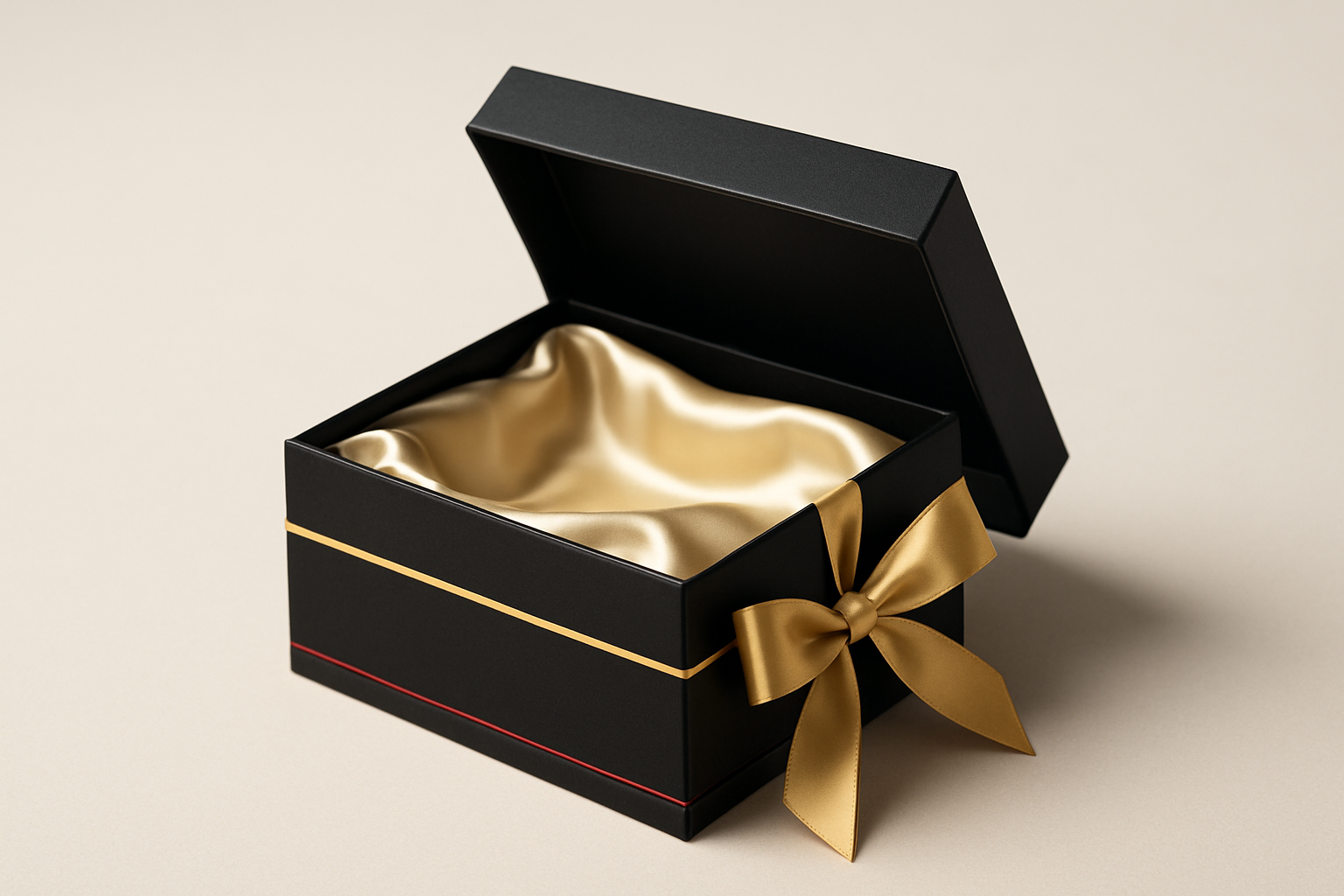
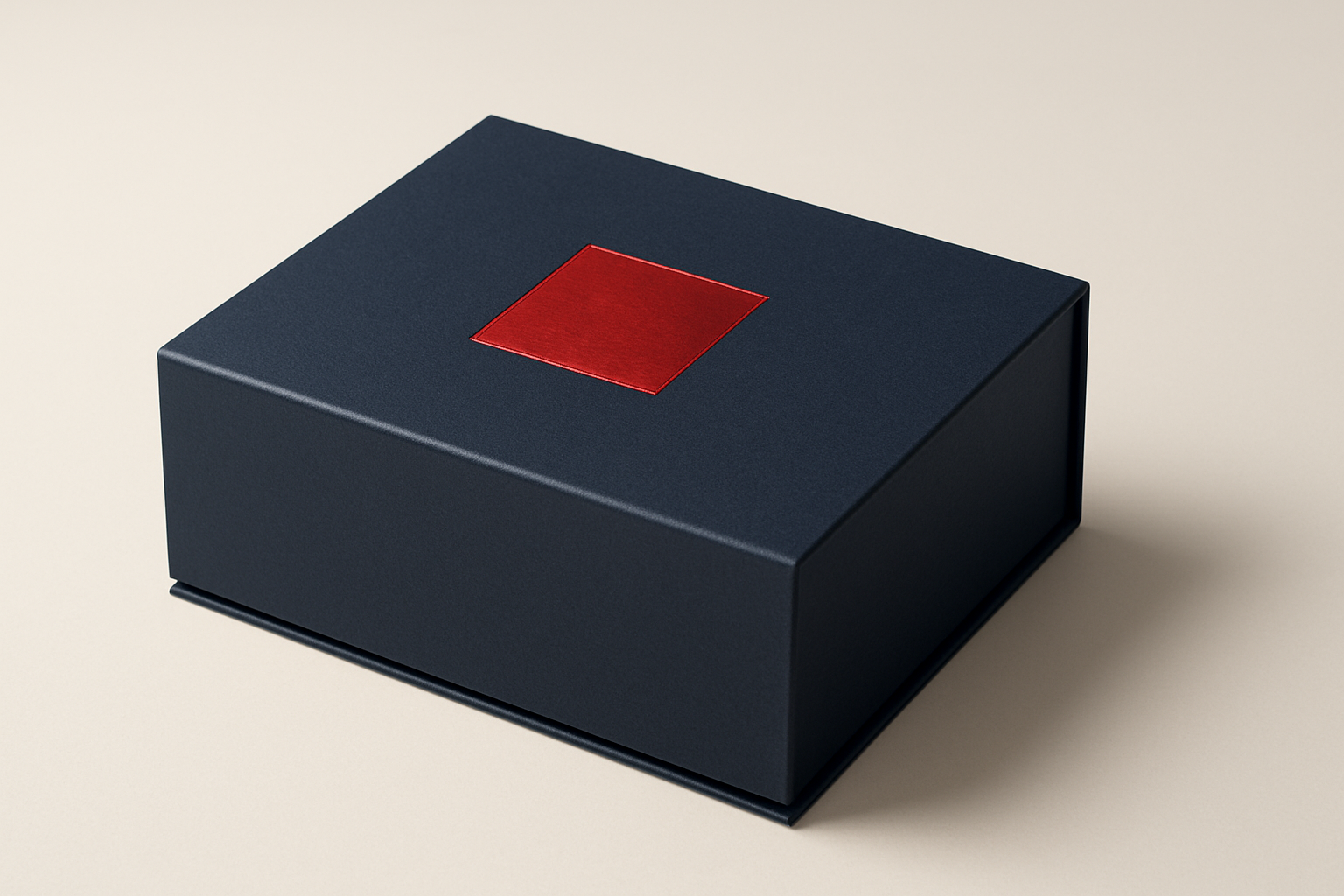
Magnetic closures, ribbon pulls, foam inserts, hinged lids, tray-and-lid configurations. We do all of it. We frequently produce two-piece tray-and-lid boxes with a neodymium magnetic closure and a debossed logo on the lid. The magnet placement can take multiple prototype rounds to get right, because the pull strength must be carefully calibrated so it does not interfere with the lid alignment. That's the kind of detail work that separates a rigid box run from a commodity carton job.
Prototyping and Sampling
We don't skip samples. Ever. Before full production runs, we produce a physical prototype for client approval. This is where you catch issues: a colour that looks different under warm retail lighting, a ribbon tab that's 3mm too short, a closure that's slightly stiff. Fix it at sample stage and it costs almost nothing. Fix it at 20,000 units and it costs a lot more than money.
Production Process and Lead Times
Look, lead times matter. Our standard production window for custom rigid boxes runs 12 to 25 working days from approved sample, depending on order volume and finish complexity. A straightforward 1,000-unit run with lamination and foil is typically closer to 12 days. A 50,000-unit run with multiple SKUs, custom foam inserts, and hot-stamping on textured paper is going to sit toward the 25-day end. Be realistic with your planning. Air freight from Fuzhou doesn't make up for two weeks of lost schedule.
Quality Control
Every box gets checked. Structural integrity, print quality, lamination adhesion, foil registration, closure function. We run inline checks on the Bobst die-cutter to catch registration drift before it compounds across a full sheet. If we catch even a minor 0.4mm foil drift on the second plate early in a run, we stop, re-register, and restart. No defective units are allowed to ship. That's the job.
Cost Considerations
Several factors drive the cost of a custom rigid box run. There's no single answer, but here's how we think about it.
| Factor | Impact on Cost |
|---|---|
| Material Choice | Premium materials like foil stamping or soft-touch lamination can increase costs. |
| Order Volume | Larger orders benefit from economies of scale, reducing per-unit costs. |
| Custom Features | Additional features like magnetic closures add to the cost. |
Shipping and Logistics
Rigid boxes don't compress, which means they ship at full volume. That's a cost factor worth understanding early. A pallet of flat-pack folding cartons and a pallet of rigid boxes are not the same freight calculation. Our team handles the customs documentation and can coordinate with your nominated freight forwarder or recommend one. We've shipped to the EU, North America, Southeast Asia, the Middle East, all of it. The paperwork is manageable if you plan ahead.
Packaging and Protection
We pack rigid boxes with corrugated dividers and poly-bag wrapping inside export cartons rated for ocean freight. Under-packed rigid boxes can shift in transit and arrive with crushed corners if they are not secured properly. We don't cut corners on the outer pack. The box you built has to arrive looking the way it left.
Why Choose a Rigid Box Manufacturer in China?
The short answer is: depth of capability at a price point that's still hard to match anywhere else. Fuzhou in particular has a dense concentration of paper suppliers, foil suppliers, and specialist finishers, which means our supply chain is tight and our lead times stay predictable. We're not trucking materials from three provinces away.
Expertise and Experience
We've been doing this since 1976. That's not a marketing line, that's just a fact. Nearly five decades of rigid box production means we've seen the problems before they become your problems. Complex structural designs, tight colour tolerances, short sampling timelines, difficult substrates; we've run into all of it, and we know how to handle it.
Comprehensive Capabilities
Rigid boxes are our core, but they're not the whole picture. Explore our full printing capabilities to see the range of what we produce. And if you specifically need more detail on our box work, the Custom Rigid Box Printing service page covers the technical specs in depth.
Frequently Asked Questions
What is the minimum order quantity for custom rigid boxes?
We typically start at 500 units, though that can flex depending on the size and structural complexity of the project. For very large or very intricate boxes, the tooling cost means the economics work better at higher quantities. We'll tell you honestly if a project makes more sense at a different volume.
Can you produce eco-friendly rigid boxes?
Yes. FSC-certified greyboard and wrap paper are standard options, and we can print with soy-based inks to reduce the environmental footprint. If your brand has specific sustainability documentation requirements, let us know early and we'll make sure the certifications are in order.
How do you ensure color accuracy in printing?
Pantone matching on the Heidelberg Speedmaster XL106, plus colour pull checks at the start of each run and at regular intervals throughout. We don't rely on digital proofs alone. A printed drawdown on the actual substrate is the only reliable way to confirm colour before a full run goes ahead.
What are the available finishing options for rigid boxes?
Foil stamping, embossing, debossing, soft-touch lamination, gloss lamination, matte lamination, spot UV, and combinations of the above. Most of our luxury runs use at least two finishing techniques together, soft-touch lamination with gold foil being the most common pairing we see. It's popular for a reason.