About the prices below: figures are indicative ranges for planning only — actual cost depends on size, material, finish, quantity and season. They are not a quote. Request a quotation for exact, current pricing on your spec.
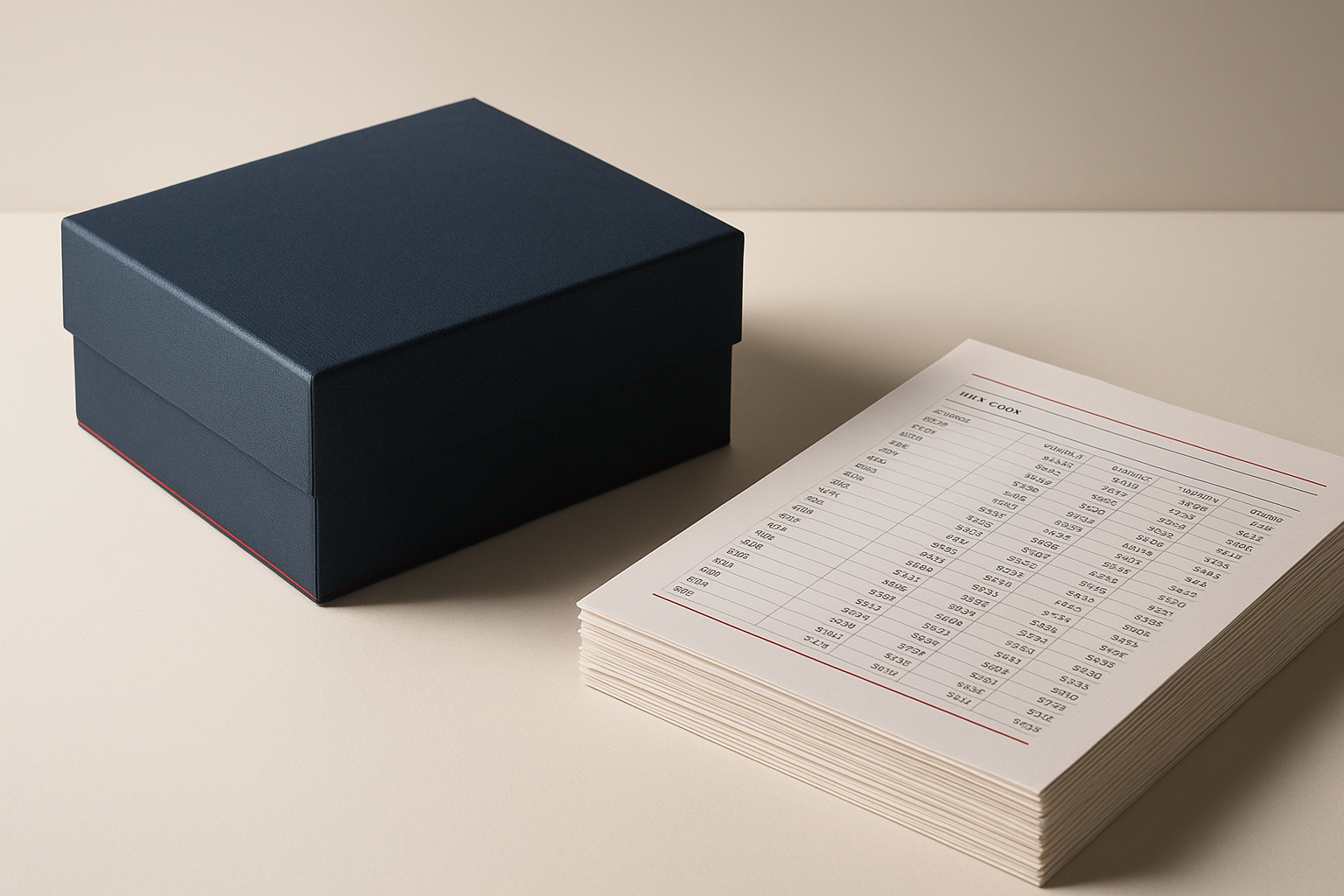
When a buyer says premium box, they usually mean this one: a rigid shell, a flap lid, and that satisfying snap when it closes. Magnetic closure boxes now outsell every other rigid format we make through our Custom Packaging Manufacturing line, and we've been making boxes in Fuzhou since 1976 with FSC and ISO 9001 certification behind us. So here's the pricing we actually quote, the hardware we actually fit, and an honest answer to the collapsible question.
What magnetic boxes cost in 2026
At 1,000 pieces the band is $1.20 to $3.80 per unit. That's wide, and three variables decide where your quote lands:
- Size and board. A phone-case-sized box on 1.5mm greyboard sits near the floor of the band. A boot-sized box on 2mm board with a full wrap sits near the ceiling.
- Construction. Collapsible builds carry extra creasing, hinge tape, and hand assembly, so they price 10 to 15% above an equivalent pre-glued box. They win the money back in the shipping container, which we'll get to.
- Finish. Matte lamination plus foil stamping is the combination we quote most, and frankly it's the right default. It photographs well, resists fingerprints, and adds only $0.10 to $0.25 per unit against a plain wrap.
Our MOQ is 500 pieces and production runs 12 to 18 days after artwork approval. Repeat runs come in faster because your die and foil plates are already on the shelf.
Collapsible or pre-glued: do the freight math first
This is the decision that moves total cost more than any finish upgrade. A pre-glued box leaves our factory fully assembled and full of air. A collapsible box leaves flat, magnets and hinge already fitted, and folds into shape in seconds at your warehouse.
| Pre-glued rigid | Collapsible magnetic | |
|---|---|---|
| Unit price at 1,000 pcs | $1.20 to $3.20 | $1.45 to $3.80 |
| Shipped form | Fully assembled | Flat, hardware pre-fitted |
| Freight volume | Baseline | Roughly 60% lower |
| Work at destination | None | About 10 seconds per box |
| Best for | Small boxes, domestic runs | Export orders, larger boxes |
A worked example from a recent order: 1,000 assembled boxes at 300x250x100mm occupy about 8.5 cubic metres once cartoned. The same boxes collapsed take around 3.3. On a sea shipment priced per cubic metre, that difference frequently exceeds the entire unit-price premium of the collapsible build. The bigger the box and the longer the haul, the more lopsided the comparison gets. For small boxes on short domestic routes, pre-glued keeps its case: the air you're shipping is cheap and nobody at your end has to fold anything.
The magnets, specifically
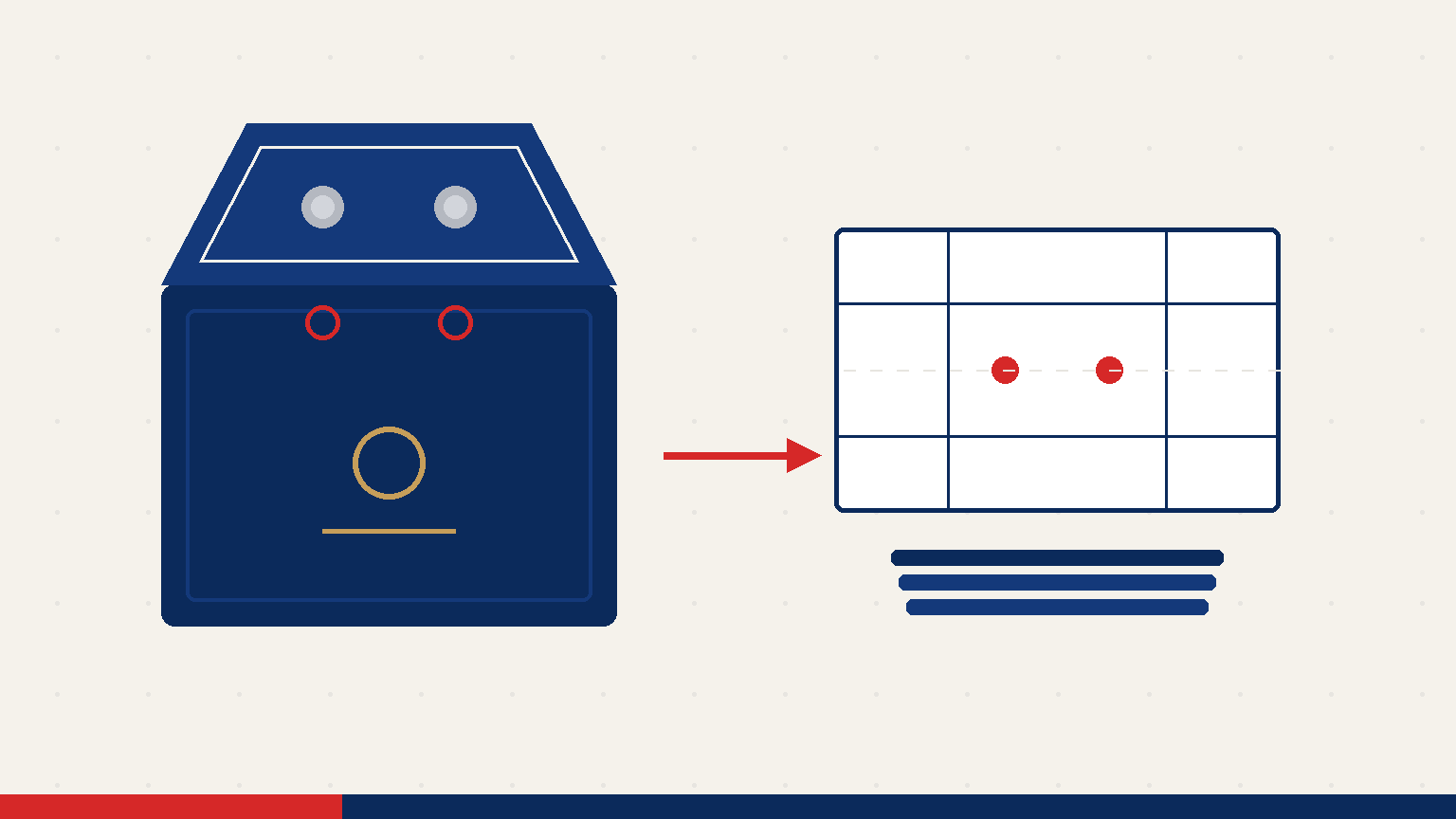
Buyers rarely ask about the hardware, and they should, because it's the part that fails in the customer's hands. The standard fit is a D10x2mm neodymium disc, grade N35 or N45, sunk into a die-cut recess in the greyboard and hidden under the wrap paper. Two magnets is the typical count. On lids wider than 250mm we fit four, because two magnets on a wide lid hold the centre while the corners lift, and a gaping corner reads as cheap no matter what the wrap cost.
One place factories quietly save a cent: swapping the base-side magnet for a plain steel disc. It works, but the closure feels softer and the snap goes dull. We pair magnet to magnet. And if you're air freighting samples, don't worry about the magnetized cargo rules; discs this small, fully enclosed in board, produce a negligible external field and ship as ordinary goods.
Prefer numbers over reading? Configure your size, board, and finish in our studio design and instant quote tool and you'll have live pricing plus a free 3D mockup before your coffee cools.
When a lid and base box beats magnetic
We sell a lot of magnetic boxes, so take this as against-interest advice: sometimes the older format is simply better. A magnetic flap is a hinge, not a structural wall. Products over roughly 2kg stress that hinge every time the box is carried, so a heavy candle set or a glass bottle belongs in a lid and base construction where all four walls are doubled board. The same goes for stacked retail displays, where a flap lid under load can bow, and for presentations where the lid should come fully away rather than swing open. Lid and base is also cheaper, since you're not paying for magnets or hinge assembly. If your product fits that description, say so in your enquiry and we'll quote both formats side by side rather than steer you to the pricier one.
Frequently asked questions
How much do magnetic closure gift boxes cost wholesale?
At 1,000 pieces, custom magnetic closure boxes run $1.20 to $3.80 per unit from our factory. Pre-glued builds sit toward the bottom of that band and collapsible builds toward the top, with size, board thickness, and finishes deciding where you land. Our MOQ is 500 pieces.
What magnets are used in magnetic closure boxes?
The industry standard is a D10x2mm neodymium disc in grade N35 or N45, sunk into the board and hidden under the wrap paper. A typical box carries two magnets. Lids wider than 250mm get four, otherwise the corners lift while the centre stays shut.
Should I order collapsible or pre-glued magnetic boxes?
Collapsible if freight is a meaningful share of your landed cost. A collapsible magnetic box ships flat and cuts freight volume by roughly 60% compared with the same box shipped pre-glued. Pre-glued makes sense for smaller boxes, short domestic hauls, or teams with no capacity to fold at destination.
What is the MOQ and lead time for custom magnetic boxes?
Our MOQ is 500 pieces and production takes 12 to 18 days after artwork approval. Repeat orders run faster because the die and foil plates already exist.
When is a lid and base box better than a magnetic closure?
When the product is heavy, when boxes stack in retail displays, or when the lid needs to come fully off for presentation. A magnetic flap is a hinge, not a structural wall, so products over roughly 2kg are safer in a lid and base construction. It's also cheaper because there's no magnet hardware.
Ready to price your own box? Start with the magnetic closure box guide for structures and dielines, then build your spec in the studio quote tool for instant numbers and a free 3D design. For everything else we print, here's an overview of our full capabilities.