If you're looking at sourcing paper packaging from Asia in 2026, the conversation almost always comes down to two countries: China and Vietnam. We've had this exact discussion with procurement managers from Sydney to Stuttgart, and honestly, there's no single right answer. But there are better and worse answers depending on your volumes, timelines, and quality bar. Let's break it down properly.
Production Capacity: China vs Vietnam
China has been the manufacturing backbone of Asia for decades. The infrastructure runs deep, the supplier networks are mature, and the production volumes are genuinely hard to match. Vietnam's rise is real, don't get us wrong, but it's a different story in terms of sheer scale. Growing fast, yes. At parity? Not yet.
China's Established Capacity
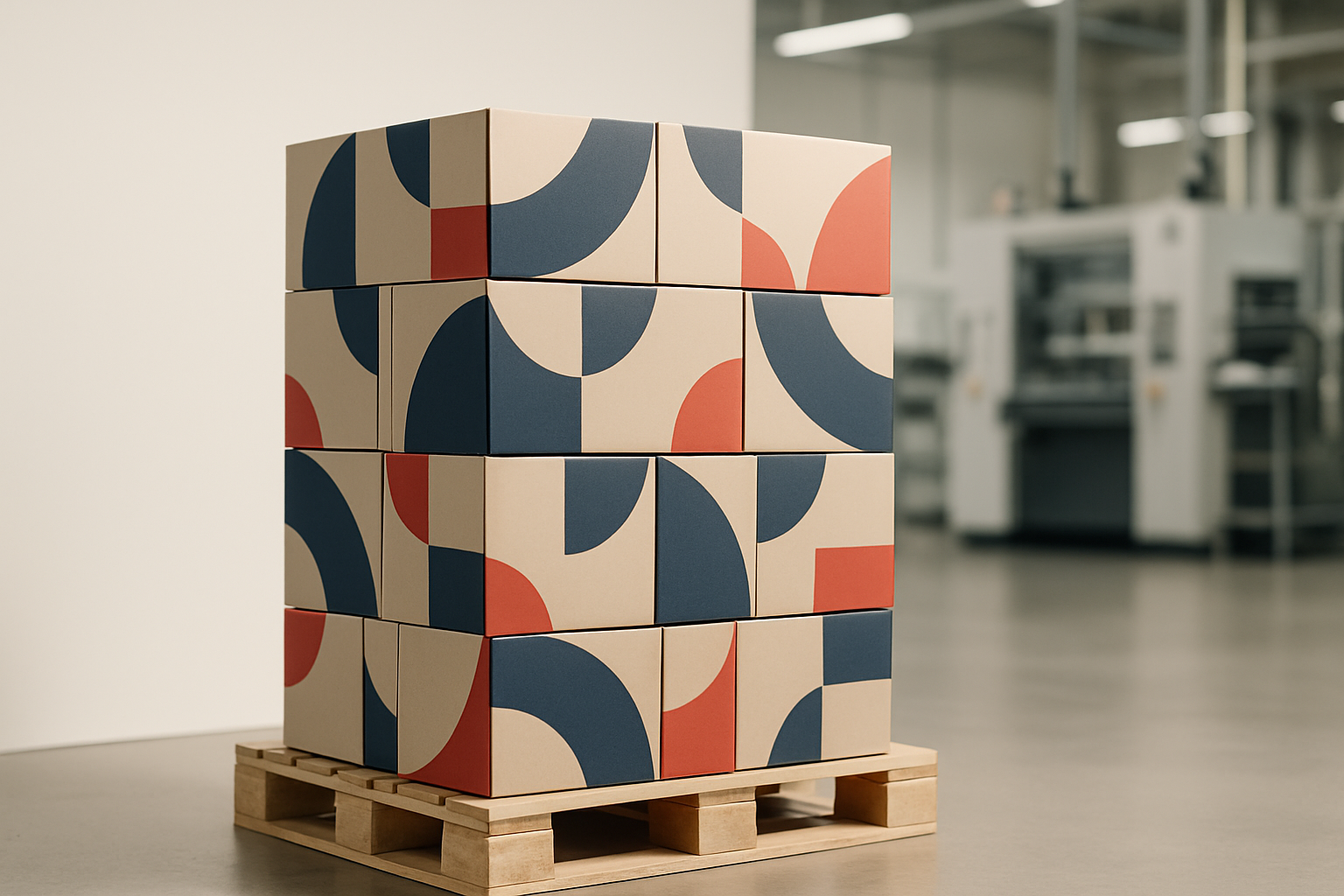
Our Fuzhou facility runs Heidelberg Speedmaster XL106 presses alongside Bobst die-cutting lines, and we can turn large-scale orders around in 12 to 25 days depending on complexity, substrate, and finish count. That's not a marketing number; that's our actual shop floor average across the last two years of production. For many health supplement brands, we routinely run large volumes of rigid setup boxes, including soft-touch lamination and multi-panel hot foil, in under three weeks. China's depth of capacity means that kind of output is routine, not exceptional.
Vietnam's Growing Production Facilities
Vietnam is investing hard. New facilities are coming online regularly, and the ones already operating are upgrading their kit. In our experience though, for orders above roughly 50,000 units with tight registration requirements or specialty finishes, you're going to feel the capacity ceiling more quickly than you would here. For medium-volume runs with simpler specifications, Vietnam can absolutely hold its own. The gap is closing. It's just not closed yet.
Quality Standards in Manufacturing
Quality is where the real conversation gets interesting. Both countries produce good packaging. But the consistency story, that's where China pulls ahead for most categories.
Quality Assurance in China
We run Pantone-matched color approvals as standard, use Sun Chemical and DIC inks depending on substrate and finish requirements, and work primarily with FSC-certified stocks ranging from 350gsm coated art paper up to 800gsm greyboard for rigid structures. Our QC team does inline checks on every Heidelberg run, not just end-of-job sampling. Between you and me, the single biggest quality issue we see from factories that cut corners is foil registration drift on long runs. On some cosmetics runs, we've observed hot foil drifting by 0.4mm. We stop the job, re-register, and restart. That costs us time, but it's still the right call every time.
Quality Monitoring in Vietnam
Vietnamese factories are genuinely improving, and some of them have adopted solid international QC frameworks. That said, when you're selecting a Vietnam packaging manufacturer, due diligence matters more than it does in China right now. Ask for production samples from actual runs, not pre-made showroom samples. Ask specifically about their inline colour measurement process. The variation between factories is wider than you'd typically see here.
Cost Considerations: Comparing Value
Cost is always in the room. Here's how it actually breaks down.
Cost Efficiency in China
China's economies of scale are real. When you're running 100,000 units on a Heidelberg XL106 with a fully amortised tool, your per-unit cost is hard to beat. The supply chain depth here in Fuzhou means we're sourcing 350gsm coated board, foil, ribbon pulls, and magnetic closures all within a short logistics radius. That keeps our material costs tight and our lead times predictable. For high-volume procurement managers, that predictability has a dollar value that doesn't always show up in the per-unit quote.
Vietnam's Competitive Edge
Look, Vietnam's labor cost advantage is genuine, and for smaller to medium runs (roughly 5,000 to 30,000 units), you can find competitive pricing there. The short answer is that the savings can be real but they're more variable. Factor in longer lead times, typically 28 to 45 days on comparable jobs from what our clients have reported, and the freight cost differential, and the net saving narrows more than the initial quote suggests. For high-volume, repeat programs? China's total cost of ownership usually wins.
Technological Advancements in Packaging
Both countries are investing in technology. The gap is in depth and density of that investment.
Innovation in China
We're running automated inline spectrophotometry on our Heidelberg presses, Bobst die-cutting with servo-driven register control, and digital pre-production proofing that cuts client approval cycles by three to four days. Automation here isn't a talking point; it's operationally embedded. Many pharma clients eventually place their order with us specifically because we can offer serialised QR code integration on the press run itself, a capability often difficult to source locally at required volumes.
Vietnam's Technological Growth
Vietnam is investing, and the trajectory is positive. The focus right now tends to be on efficiency and throughput rather than specialty finishing capabilities. For standard carton work, they're competitive. For technically complex formats, embossing over foil, soft-touch lamination on textured boards, multi-level debossing, China is still the clearer choice in 2026.
Environmental Sustainability Practices
Sustainability isn't a checkbox anymore. Buyers from the EU especially are coming to us with specific compliance requirements, and we've had to build that into our standard offering.
Sustainability Initiatives in China
We stock FSC-certified greyboard and coated art paper as standard, offer soy-based ink options through our Sun Chemical supply agreement, and can produce fully biodegradable structures for clients who need to meet EU packaging regulation requirements. In our experience, the breadth of sustainable material options here in Fujian province is genuinely hard to replicate elsewhere in the region. Many skincare clients run their entire gift box range on FSC-certified 800gsm greyboard with water-based coatings, zero plastic lamination. We do that as a standard SKU.
Eco-friendly Efforts in Vietnam
Vietnamese manufacturers are picking up sustainability practices, often pushed by European and North American buyers requiring supplier compliance documentation. The intent is there. The certified material supply chain is still thinner than what you'll find in China's established paperboard hubs, so verifying FSC chain of custody all the way back to the mill takes more work.
Logistics and Supply Chain Management
Getting product out the door on time isn't just about what happens on the press. It's about the whole chain from raw material intake to container loading.
China's Established Logistics Network
Fuzhou port gives us direct access to major transpacific and Asia-Europe shipping lanes. We coordinate regularly with freight forwarders moving containers to Los Angeles, Rotterdam, and Sydney, and our average container booking lead time is three to five days. That's genuinely useful when a client's product launch date shifts and they need to pull forward shipment. We've got the relationships to make that happen.
Vietnam's Developing Logistics Capabilities
Vietnam's infrastructure is improving, particularly around Ho Chi Minh City and Hanoi. That said, port congestion remains an intermittent issue, and the inland transport network for getting finished goods from factory to port isn't as dense as China's. For clients who've done both, the logistics variability from Vietnam is often cited as the most frustrating part of the experience, not the factory itself. Investments are being made, and the situation in five years will likely look quite different from today.
Frequently asked questions
Why choose China over Vietnam for large-scale orders?
China's production depth, advanced press technology including Heidelberg and Bobst lines, and mature logistics networks make it the more reliable choice for large-scale orders. You get tighter lead times, more consistent quality across long runs, and a total cost structure that's hard to beat above around 50,000 units.
Are Vietnamese manufacturers catching up in terms of quality?
They are, genuinely. But the range between factories is wide, so due diligence is essential. Ask for inline QC documentation, request samples from actual production runs (not showroom stock), and verify FSC or other certifications back to the issuing body. Don't take the certificate at face value.
How does labor cost impact packaging prices in Vietnam?
Lower labor costs do create real per-unit savings, particularly on smaller orders where automation matters less. Once you factor in longer lead times, thinner specialty finishing options, and less predictable logistics, that saving compresses. It's worth running a landed-cost comparison rather than just a factory gate price comparison.
Can I source sustainable packaging solutions in both countries?
Yes, in both countries. China's certified material supply chain is deeper and more documented right now, which makes compliance reporting easier for brands with strict sustainability requirements. Vietnam is building that infrastructure, but you'll need to do more verification work to get to the same level of confidence.