Sourcing custom packaging from China isn't as simple as firing off an email and waiting for boxes to arrive. There's real nuance here, and if you get it wrong, you're looking at delays, reprints, and a logistics headache that'll follow you for months. We've been running our factory floor in Fuzhou since 1976, and honestly, we've seen every mistake in the book, including our own. This 2026 Buyer's Playbook is written for procurement managers, brand owners, and designers who want straight answers about finding the right Custom Packaging Manufacturing partner in China, without the fluff.
Understanding the Chinese Packaging Landscape
China's packaging industry isn't one thing. It's hundreds of different things operating under one label. You've got factories that live and breathe eco-friendly kraft runs, factories built around luxury rigid boxes with hot foil and magnetic closures, and everything in between. The sectors we serve most heavily include cosmetics, electronics, food and beverage, and pharma, and each one has completely different expectations for what "quality" even means.
The short answer is: not every Chinese packaging factory can do what you need. Knowing who specialises in what will save you weeks of back-and-forth.
Key Regions for Packaging Production
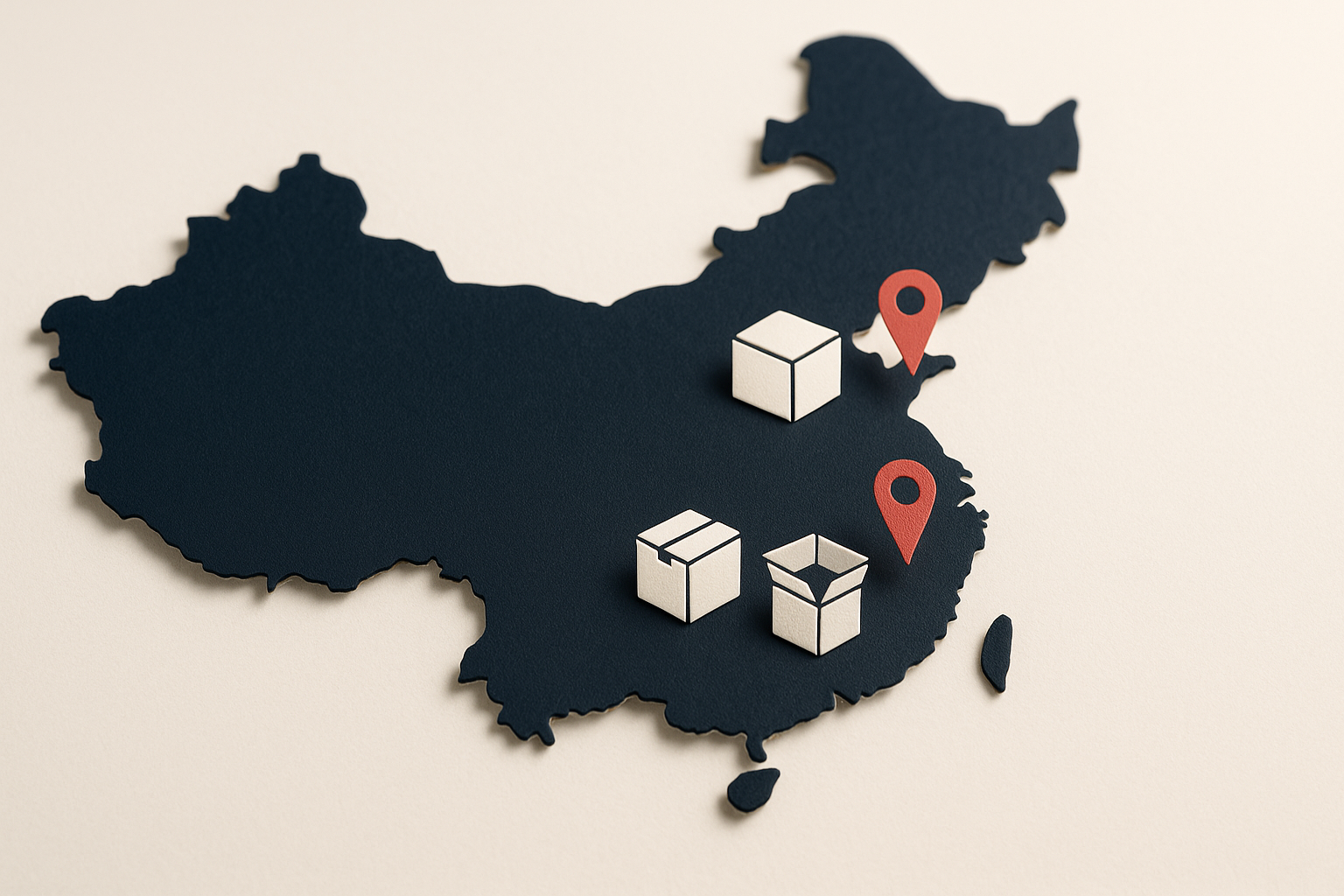
We're based in Fuzhou, Fujian province. That's not an accident. Fuzhou has strong port infrastructure, a deep pool of skilled press operators and structural engineers, and a manufacturing culture that goes back generations. Between you and me, it's one of the more underrated packaging hubs in China compared to the noise around Guangdong and Zhejiang. Those regions are legitimate powerhouses too, especially for high-volume runs and certain tech-adjacent packaging categories. But for premium print quality combined with reasonable lead times, Fuzhou holds its own.
Steps to Source Custom Packaging from China
There's no magic shortcut. But there is a logical sequence that makes the whole process less painful. Here's how we'd walk you through it:
Define Your Packaging Requirements
Start with specifics. Not "we need a nice box." Real specifics. Are you running 800gsm greyboard for a rigid set-up box, or 350gsm coated art paper for a folding carton? Is the inside plain, or do you need a custom EVA foam insert? What's the drop-test requirement? Do you have a Pantone reference, or are you working from a CMYK file that's never been press-checked?
We've seen situations where clients needed 400gsm SBS board with a matte lamination and a specific rigidity to satisfy their local retail shelf requirements, which only became clear after multiple rounds of sampling. Get those details on paper before you approach any supplier. It saves everyone time.
Evaluate Potential Suppliers
Don't just look at a factory's website and tick a box. Ask for samples, specifically samples from runs similar to yours. If you need foil stamping, ask to see foil stamping. If you need six-colour printing, ask what press they're running. We use a Heidelberg Speedmaster XL106 for our primary commercial sheet work, and that machine's registration consistency is something we're genuinely proud of. Ask your shortlisted suppliers the same kind of question. Good factories won't hesitate to answer.
Also check their quality control documentation. ISO 9001 is a baseline. Ask what happens when a run fails mid-production. Ask specifically.
Packaging Materials and Finishes
This is where a lot of buyers either save money or waste it. Choosing the wrong substrate for your design is a real problem, and it's more common than you'd think.
Material Options
The workhorse materials are well known: corrugated board for shipping and e-commerce packaging, kraft paper for brands chasing that natural aesthetic, coated art paper for anything with detailed graphics or photography. We stock FSC-certified versions of most of our core substrates, which matters increasingly for brands selling into European and North American markets where buyers are checking certification documentation.
In our experience, the material decision that trips people up most often is greyboard density for rigid boxes. There's a meaningful difference between 1200gsm and 1500gsm in terms of hand-feel and structural rigidity, and it's not always obvious until you're holding a finished sample.
Specialty Finishes
Soft-touch lamination. Spot UV. Foil stamping in gold, silver, holographic. Embossing and debossing. These aren't just decorative choices, they're functional ones too. A soft-touch matte surface on a cosmetics box communicates something very specific to a consumer picking it up in a store.
We print with Sun Chemical and DIC inks across our Heidelberg fleet, which gives us consistent colour reproduction run to run. That consistency matters especially when you're doing repeat orders six months apart and can't have the brand colour drift. We've had many clients come to us after a previous supplier couldn't hold their custom Pantone across a reorder. We matched it. That's a basic expectation, but you'd be surprised how often it falls apart.
Production Timelines and Logistics
Plan early. Seriously. This is not a category where you want to be chasing a deadline.
Production Lead Times
Standard production cycles here run 12 to 25 working days, depending on complexity, order volume, and finish type. A straightforward folding carton run in 350gsm art paper, single Pantone, no special finish? We can often turn that in 12 days. A rigid gift box with foil, ribbon pull, custom foam insert, and multi-SKU variants? You're looking at closer to 20 to 25 days, minimum. Factor in freight on top of that. Sea freight from Fuzhou to Los Angeles runs roughly 18 to 22 days. Air freight is faster but eats your margin fast on heavy goods.
Shipping and Logistics
Customs documentation, HS codes, certificate of origin, fumigation certificates for wooden components, these aren't optional extras. They're the difference between your shipment clearing customs on schedule and sitting in a bonded warehouse for two weeks. Our team handles freight coordination and documentation support as standard. We've been exporting since the 1980s. We know what different markets need.
Quality Assurance and Compliance
Look, quality control is where a lot of factories make promises they can't keep. We try not to do that.
Quality Control Processes
Our QC process runs in three stages: pre-production (substrate check, colour proof sign-off), mid-run inspection (registration, colour density, structural integrity), and final outgoing inspection before packing. We use a Bobst die-cutter for our rigid box and complex carton work, and the tolerance control on that machine means we're not guessing on crease placement.
We once had a run where the foil registration drifted 0.3mm on the first plate. Caught it at mid-run inspection. We reset the plate, re-ran the affected sheets, and the client never saw a single defective unit. That's what the process is for.
Regulatory Compliance
This depends heavily on your destination market and product category. Food-contact packaging has different requirements to cosmetics outer boxes. European markets have specific recyclability and labelling mandates that are tightening further in 2025 and 2026. We're ISO 9001 certified and carry FSC chain-of-custody certification. If you have specific compliance requirements, tell us upfront. Don't assume. We'd rather ask ten clarifying questions at quoting stage than have a compliance issue at customs.
Establishing a Long-term Supplier Relationship
The clients we enjoy working with most aren't necessarily the biggest ones. They're the ones who treat the relationship like a partnership instead of a transaction. It makes a genuine difference to how we prioritise their work.
Communication and Transparency
We're direct people. We'd rather tell you a timeline is tight and work out a solution than tell you what you want to hear and miss the ship date. If you want that same directness back from a supplier, you need to build it into the relationship from day one. Share your production calendar. Tell us about your upcoming launches. Don't go silent for six months and then need 80,000 units in three weeks.
We communicate primarily over email and WeChat, depending on client preference. For large accounts we'll schedule regular production update calls. It doesn't have to be complicated.
Continuous Improvement
The clients who get the best results over time are the ones who give us real feedback after each run. What worked. What didn't. What they'd change. We've redesigned carton structures, adjusted board weights, and reformulated lamination specs based on client feedback, and those improvements have ended up benefiting other clients too. That's how a long supplier relationship should work. You're not just buying boxes. You're building a production capability together.
Frequently asked questions
How do I ensure the quality of packaging sourced from China?
Work with suppliers who can show you their actual QC process, not just describe it. Request pre-production samples and sign off on them before any full run begins. At Leader Printing, we run three-stage quality checks covering materials, mid-run production, and final outgoing inspection on every order.
What materials are available for sustainable packaging?
We stock FSC-certified coated and uncoated papers, recycled kraft, and SBS boards with post-consumer recycled content. We can also advise on soy-based ink options (we use Sun Chemical's soy-ink range for certain applications) and water-based lamination alternatives. Tell us your sustainability targets and we'll match the substrate accordingly.
How can I manage shipping logistics effectively?
Don't try to manage it alone from abroad, especially for the first few shipments. We coordinate with freight forwarders regularly and can handle documentation support for most major destination markets. Sea freight from Fuzhou to European and North American ports is well-established. We'll give you realistic transit estimates, not optimistic ones.
What are the typical lead times for custom packaging production?
Production runs 12 to 25 working days here, depending on complexity and order size. Simple folding cartons sit at the lower end. Multi-component rigid boxes with specialty finishes sit at the upper end. Plan your order at least six to eight weeks before your in-hands date if sea freight is involved. That buffer has saved more than a few of our clients from a very stressful month.