Choosing the right binding method for your catalogs when sourcing from China can significantly impact both aesthetics and functionality. Whether you're aiming for a sleek, professional look or a more economical option, understanding the differences between perfect bound and saddle stitch is crucial.
Understanding Perfect Bound vs Saddle Stitch
for catalog printing in China, the binding method you choose directly influences the final product's appearance and usability. Here's a breakdown of perfect bound vs saddle stitch:
Perfect Bound
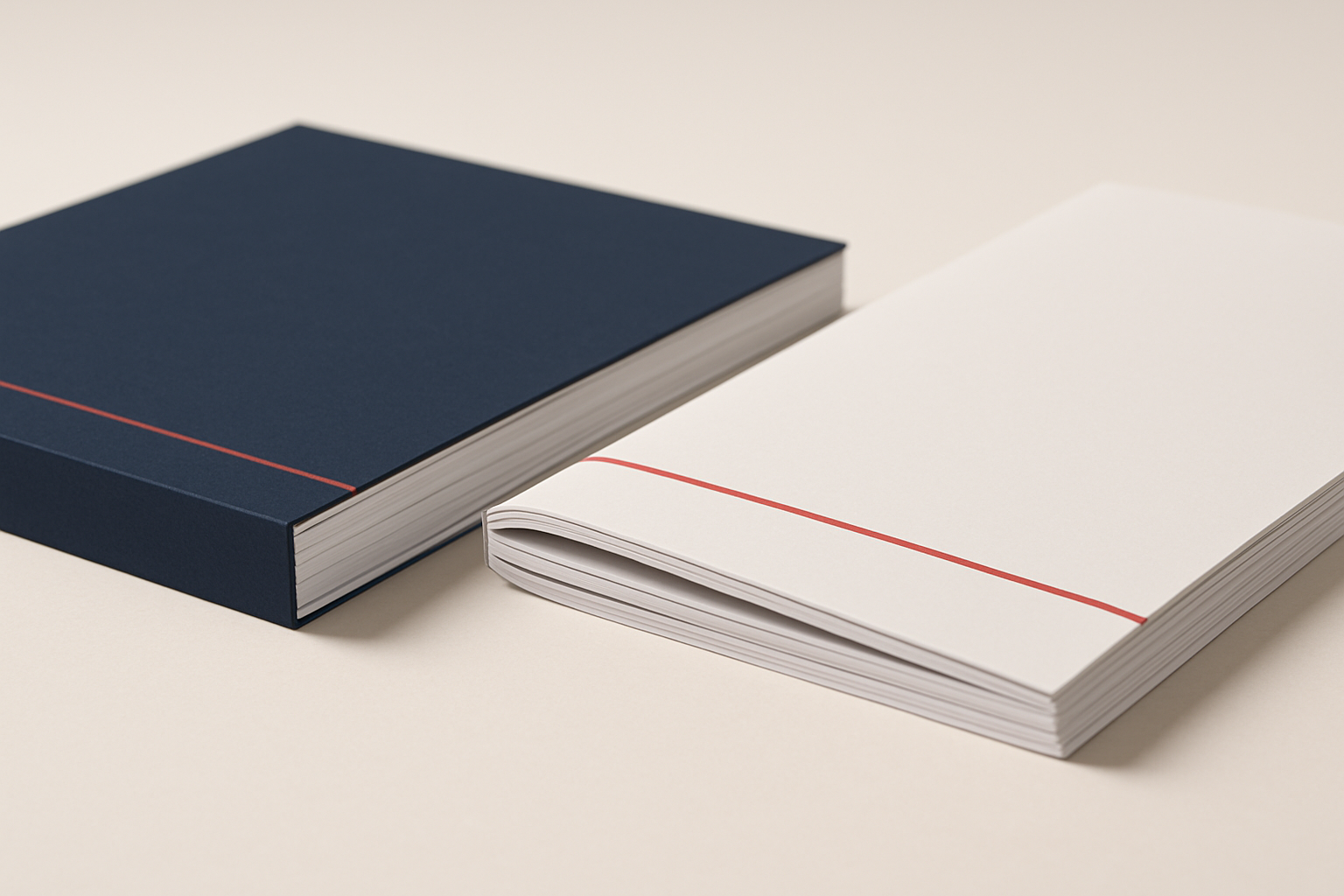
Perfect binding is a method where the pages and cover are glued together at the spine. This creates a flat spine that can display text or graphics. It's ideal for catalogs with a higher page count, typically over 40 pages. The result is a clean, professional look that resembles a paperback book.
Saddle Stitch
Saddle stitching involves folding sheets and stapling them along the spine. This method is suitable for smaller catalogs, typically ranging from 8 to 64 pages. It's an economical choice that allows the catalog to lay flat when open, which is practical for presentations or easy browsing.
Key Considerations for Binding Choice
Several factors should guide your decision between perfect bound and saddle stitch:
Page Count
The number of pages is a primary factor. Saddle stitching is best for thinner catalogs, while perfect binding is ideal for thicker publications.
Budget Constraints
Cost is always a consideration. Saddle stitching is generally more cost-effective, especially for smaller quantities. However, for larger volumes, perfect binding's cost becomes more competitive due to economies of scale.
Durability
If your catalog will be handled frequently, perfect binding offers greater durability. The glued spine provides strength, making it less likely to fall apart with heavy use.
Comparing Perfect Bound and Saddle Stitch
Let's look at a side-by-side comparison to help make your decision easier:
| Feature | Perfect Bound | Saddle Stitch |
|---|---|---|
| Best suited for | 40+ pages | 8-64 pages |
| Cost | Higher per unit, but decreases with volume | Lower per unit |
| Durability | High | Moderate |
| Spine appearance | Flat, can include text/graphics | No spine text |
Production Considerations
Beyond the basic features, consider the production capabilities of your chosen manufacturer. At our Fuzhou factory, we utilize ISO 9001 certified processes and G7 color matching to ensure high-quality output.
Materials and Finishing
For both binding methods, selecting the right paper and finishes is key. We offer coated art paper ranging from 250gsm to 400gsm, with options for soft-touch, matte, or gloss lamination. These choices can enhance the tactile experience of your catalog.
Choosing Based on Audience and Purpose
The intended audience and purpose of your catalog can also dictate the best binding choice.
Corporate vs Consumer
For corporate catalogs intended for business clients, a perfect bound catalog can convey professionalism and quality. Consumer catalogs, especially seasonal or promotional ones, might benefit from the cost efficiency of saddle stitch.
Frequency of Use
Catalogs intended for frequent reference, like product manuals, benefit from the durability of perfect binding. In contrast, event programs or limited-time offers can efficiently use saddle stitch.
Key Takeaways
- Choose perfect binding for thicker, more durable catalogs that require a polished appearance.
- Opt for saddle stitching for cost-effective, smaller catalogs that need to lay flat.
- Consider your budget and the catalog's purpose to guide your binding decision.
- Use our factory's ISO 9001 certified processes for high-quality catalog production.
- For a hands-on design experience, explore our free 3D mockup tool.
Frequently Asked Questions
What is the minimum page count for perfect binding?
Perfect binding typically requires a minimum of 40 pages to ensure the spine has sufficient thickness for binding.
Can I print text on the spine of a saddle-stitched catalog?
No, saddle-stitched catalogs do not have a spine that can accommodate text or graphics.
What are the typical lead times for catalog production?
Lead times at our factory range from 12 to 30 days, depending on the complexity and volume of the order.
Are there environmental certifications available for catalog materials?
Yes, we offer FSC-certified materials (SGSHK-COC-011817) to ensure environmentally responsible sourcing.