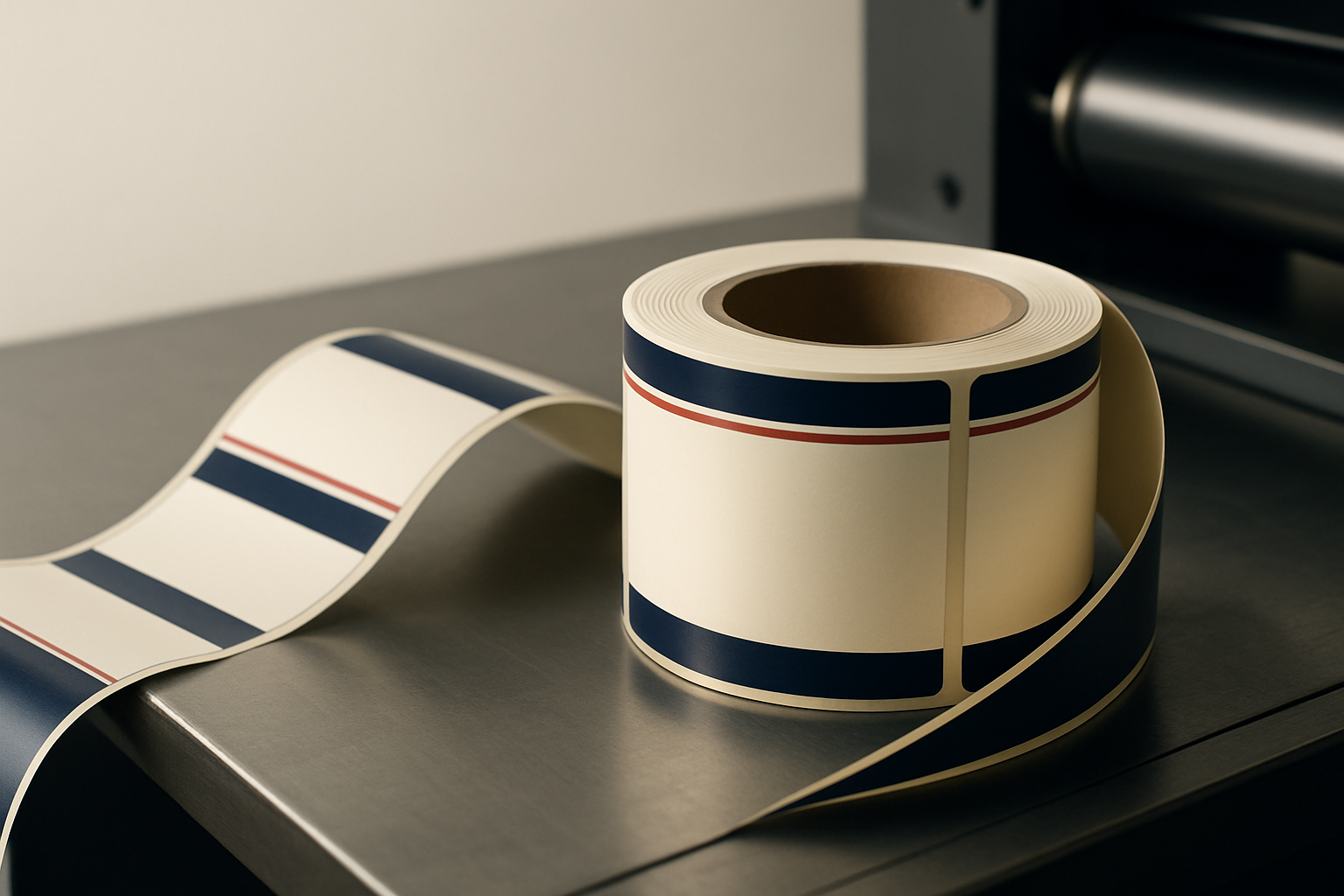
Adhesive label printing in China isn't as straightforward as most buyers assume. You're making several decisions at once, picking the right substrate, the right adhesive, and the right finish, and getting any one of them wrong can mean labels that peel in the cold chain or look cheap on shelf. As a Custom Label Printing partner, we've been running these combinations through our Fuzhou factory since 1976 and we know which choices actually matter.
Substrates for Adhesive Labels
Substrate choice drives everything else. Get it wrong and no amount of fancy finishing will save you. In our experience, most projects fall cleanly into one of two camps: paper or film.
Paper Substrates
Paper is the workhorse. It's cost-effective, takes ink well, and works with almost every finish we offer. We typically run coated papers from 80 to 120gsm. That range gives you solid print quality and good adhesion whether you're going gloss or matte. It's the right call for most consumer goods labels where budget and shelf appearance both matter.
Film Substrates
Film is a different animal. Polypropylene (PP) and polyethylene (PE) films handle moisture, chemicals, and rough handling that would destroy a paper label fast. If you're packaging cosmetics, cleaning products, or anything that lives in a damp environment, don't even consider paper. Film costs more upfront, but it won't fail on you mid-distribution.
Types of Adhesives
The adhesive doesn't get talked about enough. It's invisible on the finished label, but it's doing all the real work.
Permanent Adhesives
For food and beverage, health products, or anything that ships across multiple climates, permanent adhesive is the default. It bonds aggressively and stays bonded. The label isn't coming off unless someone works at it deliberately.
Removable Adhesives
Removable adhesives hold firmly under normal conditions and peel away cleanly without leaving residue. They're the right choice for promotional labels, temporary price stickers, or containers your customer will reuse. The short answer is: if your customer might want that label gone someday, use removable.
Label Finishes Guide
Finish is where you make your brand look intentional rather than generic. We offer a full range, and honestly, the difference between a gloss label and a soft-touch label on a premium product is immediately obvious to anyone who picks it up.
Gloss and Matte Finishes
Gloss lamination punches up color vibrancy and gives that bright, reflective look that grabs attention on a crowded retail shelf. Matte does the opposite. It reads as quieter, more premium, more considered. Neither is universally better, it depends entirely on your brand positioning.
Specialty Finishes
Soft-touch lamination gives the label a velvety texture that's genuinely hard to put down once you've felt it. Spot UV lets you raise specific design elements, a logo, a pattern, a single line of text, so they catch light differently from the rest of the label. Both add a tactile dimension that flat printing simply can't replicate.
| Finish Type | Appearance | Best For |
|---|---|---|
| Gloss | Shiny, vibrant | Consumer products |
| Matte | Non-reflective, premium | Luxury items |
| Soft-touch | Velvety feel | High-end packaging |
| Spot UV | Highlighted elements | Design focal points |
Production Capabilities
We're ISO 9001 certified and FSC CoC certified, which matters if your retail customers or brand guidelines require documented chain-of-custody compliance. SGS audits our processes independently. That's not marketing language, those are certifications you can verify and reference in your own supplier documentation.
Lead Times and Pricing
Lead times run 12-30 days depending on substrate, finish complexity, and order volume. Larger runs benefit from tooling amortization, so your per-unit cost drops meaningfully as quantities increase. We can give you a clearer picture on pricing once we know your spec, but the range is real and we don't pad it with unnecessary buffer days.
Choosing the Right Label Supplier
There's no shortage of custom label suppliers in China. What separates a reliable one from a frustrating one is verifiable experience, clear certifications, and honest lead times. We've been running label production in Fuzhou since 1976. That's not a claim we make casually, it means we've seen the problems that come up and we've built processes to avoid them.
Key takeaways
- Choose between paper and film substrates based on your product's protection needs.
- Select adhesives that match the label's intended use and removal requirements.
- Explore different finishes to enhance your product's visual appeal and tactile experience.
- Leverage our certified production capabilities to ensure quality and compliance.
- Benefit from reduced unit costs on larger volume orders due to tooling amortization.
Frequently asked questions
What substrates are available for adhesive label printing?
We work with both paper and film substrates. Paper options run 80-120gsm coated stock. Film options include polypropylene (PP) and polyethylene (PE) for applications that need moisture or chemical resistance.
How do I choose between permanent and removable adhesives?
If the label needs to stay on through the product's full life cycle, go permanent. If your end user might need to remove it cleanly without residue, use removable. It's usually a straightforward call once you think through how the product gets used.
What are the most popular label finishes?
Gloss and matte lamination cover the majority of projects. For premium positioning, soft-touch lamination and spot UV are worth the added cost. They change how a product feels in hand, not just how it looks.
How long does it take to produce custom adhesive labels?
Standard lead times are 12-30 days. More complex specs with multiple specialty finishes sit toward the longer end. We'll give you a realistic timeline with your quote, not a best-case number we can't hit.