Picking between shrink-sleeve and adhesive labels is one of those decisions that looks simple on the surface but can have a real impact on your shelf presence, your production line, and your margins. We've helped brands work through this choice for decades, and honestly, there's no universal right answer. But there are clear signals that point you toward one or the other.
The Basics of Beverage Label Types
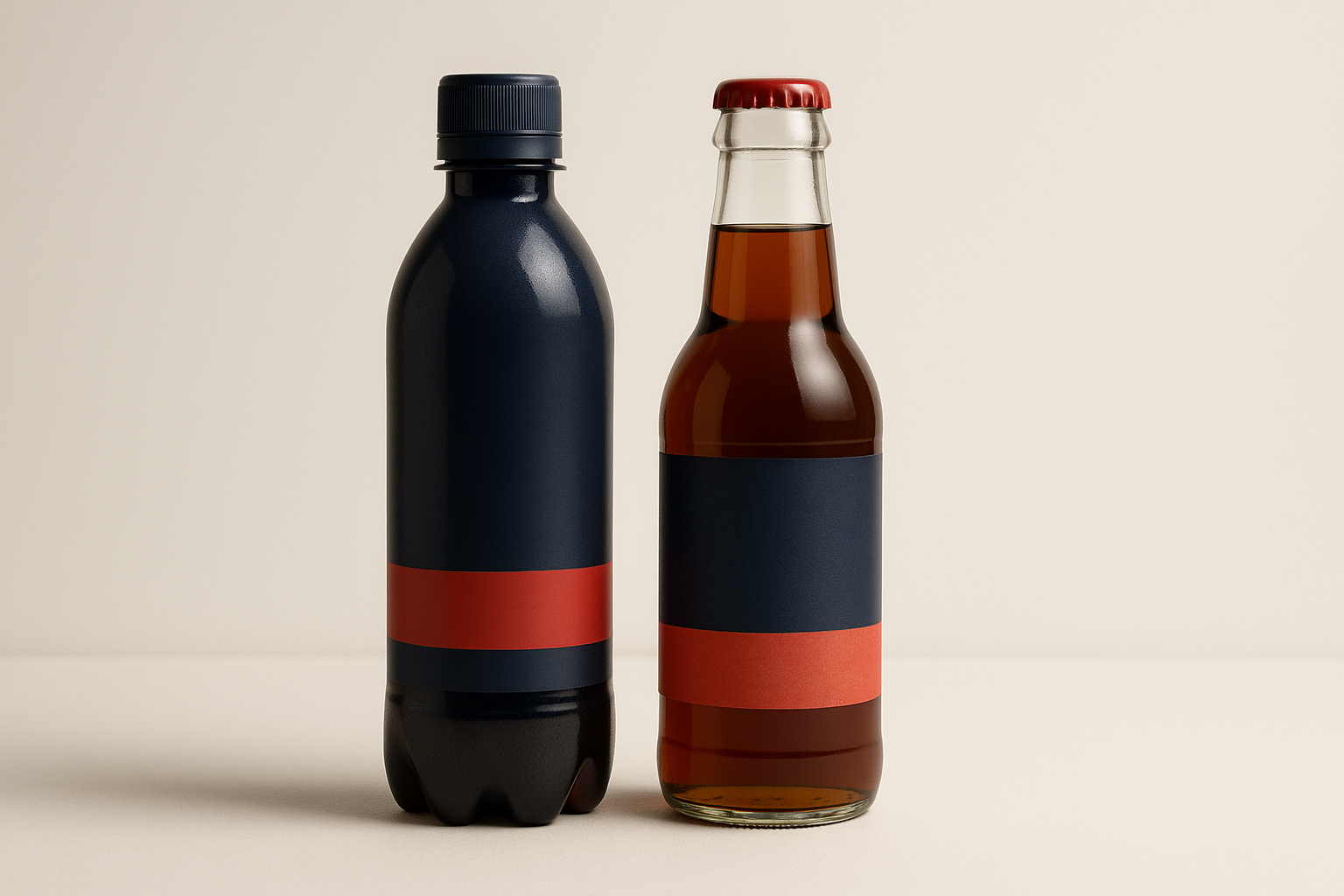
The core difference comes down to application method and how much of the container you want to own visually. Shrink-sleeves wrap the whole container. Adhesive labels cover a panel. That distinction drives almost every other trade-off we'll cover below.
Shrink-Sleeve Labels
Shrink-sleeve labels are made from plastic films, typically PVC, PETG, or OPS, that conform tightly to the container when heat is applied. Full 360-degree coverage. No blank real estate anywhere on the bottle.
- Material: PVC, PETG, or OPS films, chosen for durability and print fidelity across curved surfaces.
- Application: Requires a heat tunnel using steam or electric heat to shrink the film uniformly onto the container.
Adhesive Labels
Adhesive labels, sometimes called pressure-sensitive labels, are printed on a paper or film substrate with an adhesive backing. You press them on. Done. That simplicity is genuinely valuable for a lot of products.
- Material: Paper or film substrates, available with matte lamination, gloss lamination, soft-touch lamination, spot UV, or foil finishes depending on your brand positioning.
- Application: Standard label dispensers or applicators handle these easily on high-speed production lines.
Cost Considerations
Cost is where a lot of buyers make their final call. Here's how the two formats compare at a glance.
| Label Type | Initial Setup Costs | Per-Unit Cost |
|---|---|---|
| Shrink-Sleeve | Higher (due to tooling and heat application equipment) | Moderate to high, depending on film material and complexity |
| Adhesive | Lower | Lower, especially for paper substrates |
Design Flexibility
Shrink-sleeves win on canvas size. There's simply more room to tell a story when you're working with the entire container surface. If your container has an unusual shape, a shrink-sleeve also conforms to it cleanly in a way an adhesive label can't.
Shrink-Sleeve Design Benefits
- 360-degree branding potential
- Better for uniquely shaped containers
- Enhanced shelf appeal
Adhesive Label Design Benefits
- Ideal for simple shapes
- Cost-effective for smaller print runs
- Easy to change and update design
In our experience, brands that need to refresh packaging seasonally or test multiple SKUs prefer adhesive labels for exactly that last reason. Swapping a new adhesive label design is far faster and cheaper than retooling a shrink-sleeve.
Environmental Impact
Sustainability matters, and it's a fair question to ask about both formats. The short answer is that adhesive labels on paper substrates or recyclable film have a smaller environmental footprint right now. Shrink-sleeve films are plastic, and while recyclable options exist, they're not yet universal. That said, this gap is closing as film manufacturers invest in biodegradable and mono-material options that are easier to recycle at scale.
Shrink-Sleeve Sustainability
Shrink-sleeve labels are typically plastic-based, which creates recycling complications. Biodegradable and recyclable film options are available but should be verified with your supplier before specifying them. Don't assume.
Adhesive Label Sustainability
Paper substrates and recyclable films make adhesive labels the more straightforward choice if sustainability is a hard requirement. They also use less material per unit, which reduces waste in aggregate.
Production and Application Speed
Adhesive labels are faster to apply. That's not a close call. Simpler machinery, no heat tunnel required, and faster changeover times all add up. If your production line runs at high volume and downtime is expensive, that matters a lot.
Choosing the Right Label for Your Needs
Here's our honest take: if your container is a standard cylinder and your budget is tight, go adhesive. If you're launching a premium product in a distinctive bottle and you need maximum shelf impact, shrink-sleeve is worth the extra investment. Factor in these specifics when you're deciding:
- Container shape and size
- Branding and design requirements
- Budget constraints
- Environmental goals
- Production timeline
Key Takeaways
- Shrink-sleeve labels deliver 360-degree branding and handle complex container shapes well.
- Adhesive labels are more cost-effective and easier to update, making them practical for simpler designs and smaller runs.
- Paper substrates and recyclable films give adhesive labels a sustainability edge at the moment.
- Shrink-sleeve setup costs are higher, so they're best justified at meaningful volume.
- Adhesive labels apply faster, which protects production line efficiency.
Frequently asked questions
What is the main advantage of shrink-sleeve labels?
Full 360-degree coverage. They wrap the entire container, which maximizes visual impact and works well on bottles with curves or unusual shapes that a flat adhesive label can't conform to cleanly.
Are adhesive labels more cost-effective than shrink-sleeve labels?
Yes, generally. Lower setup costs, simpler application equipment, and cheaper per-unit pricing on paper substrates all make adhesive labels the budget-friendly choice, particularly for smaller print runs.
Which label type is more environmentally friendly?
Adhesive labels on paper or recyclable film substrates are the more straightforward option right now. Shrink-sleeve films are improving, but verify recyclability claims with your supplier before committing.
How do I choose the right label type for my product?
Start with your container shape and your branding ambitions. If the container is simple and the design doesn't need to wrap, adhesive wins on cost and speed. If you're going for high shelf impact on a premium or unusually shaped bottle, shrink-sleeve is the better call.