in toy packaging, ensuring safety compliance is not just a regulatory requirement - it's a moral obligation. One critical aspect often overlooked by suppliers is the thickness of plastic film used in toy packaging, governed by the ASTM F963 standard. Misinterpretation can lead to non-compliance, risking both safety and reputation.
Understanding ASTM F963 and Its Importance
The ASTM F963 is a comprehensive safety standard that addresses numerous hazards associated with toys. Among these, the thickness of plastic films is crucial. The standard specifies a minimum thickness of 0.038mm (1.5 mil) for plastic films used in toy packaging. This requirement is designed to prevent suffocation hazards, as thinner films could easily cling to a child's face.
Why Thickness Matters
Thicker films are less likely to conform to facial features, significantly reducing the risk of suffocation. The ASTM F963 standard recognizes this risk and mandates the 0.038mm minimum to ensure safety. Suppliers who fail to adhere to this thickness not only jeopardize safety but also risk recalls and legal repercussions.
Common Misinterpretations
Despite the clear guidelines, many suppliers use films as thin as 0.025mm, believing it meets the standard. This misunderstanding often arises from misreading the metric and mil conversions, leading to non-compliance. It's crucial to ensure accurate conversion and understanding of the required thickness.
Comparing Plastic Film Options
Choosing the right plastic film involves balancing cost, safety, and aesthetic considerations. Below, we compare common film types and their applications in toy packaging.
| Film Type | Typical Thickness | Use Case | Compliance Notes |
|---|---|---|---|
| PVC | 0.03mm - 0.05mm | Clarity, strength | Ensure ≥ 0.038mm for compliance |
| PP | 0.02mm - 0.04mm | Cost-effective, moisture barrier | Commonly misused below standard |
| PE | 0.04mm - 0.06mm | Flexibility, durability | Meets standard at typical thickness |
Ensuring Compliance in Production
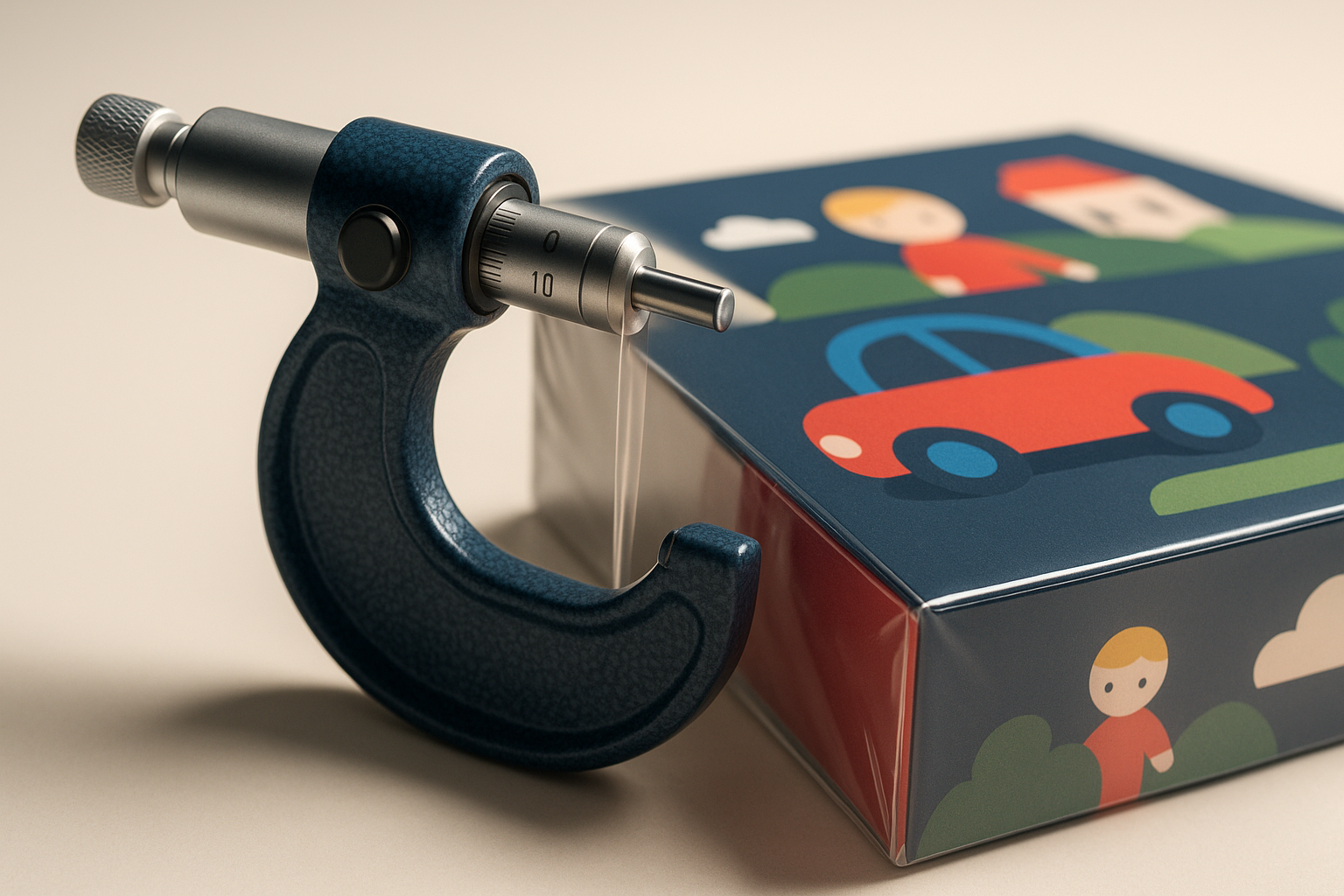
To ensure compliance with ASTM F963, it's essential to incorporate stringent quality control measures. At our Fuzhou factory, we utilize precise measuring tools and conduct regular audits to verify film thickness. Our ISO 9001 certification underscores our commitment to quality and safety.
Quality Assurance Practices
Our quality assurance process includes:
- Random sampling of film batches for thickness checks.
- Maintaining detailed records for traceability.
- Regular training for staff on ASTM F963 requirements.
Alternatives to Plastic Film: Sustainable Options
As sustainability becomes increasingly important, many brands are exploring alternatives to traditional plastic films. Options such as biodegradable films, recycled content films, and paper-based solutions are gaining traction.
Biodegradable Films
These films break down more quickly than conventional plastics, reducing environmental impact. However, ensuring they meet the 0.038mm thickness requirement is still essential for safety compliance.
Paper-Based Solutions
Using paper instead of plastic can enhance recyclability and appeal to environmentally conscious consumers. However, this option may require additional structural support to match the strength of plastic films.
Window Patch Toy Box Safety
Window patches are a popular choice for showcasing toys without opening the packaging. Ensuring these windows comply with the ASTM F963 standard is crucial.
Design Considerations
When designing window patches, it's vital to account for the film's thickness. A common mistake is using films that do not meet the minimum thickness, which can compromise safety. Ensure your designs incorporate compliant films to meet safety standards.
Production Considerations
During production, maintain rigorous quality checks on window patch films. This includes confirming the film's thickness and clarity to ensure both safety and aesthetic appeal.
Key takeaways
- ASTM F963 requires a minimum plastic film thickness of 0.038mm for toy packaging to prevent suffocation risks.
- Common errors include misinterpretations of thickness requirements, leading to non-compliance.
- Sustainable alternatives to plastic films include biodegradable options and paper-based solutions, but compliance with thickness standards is still necessary.
- Ensure window patches in toy boxes also meet the ASTM F963 thickness requirements.
- Implementing stringent quality control measures can help maintain compliance and ensure safety.
Frequently asked questions
What is the minimum thickness for plastic film in toy packaging?
The ASTM F963 standard requires a minimum thickness of 0.038mm to prevent suffocation hazards.
Why do some suppliers get the thickness wrong?
Misinterpretations often occur due to incorrect metric to mil conversions, leading suppliers to believe thinner films are compliant.
Are there sustainable alternatives to plastic film for toy packaging?
Yes, options include biodegradable films and paper-based solutions, but they must still meet the ASTM F963 thickness requirement.
How can I ensure my toy packaging is compliant?
Implement rigorous quality control measures, regular training, and use precise measuring tools to verify film thickness during production.