About the prices below: figures are indicative ranges for planning only — actual cost depends on size, material, finish, quantity and season. They are not a quote. Request a quotation for exact, current pricing on your spec.
Every summer the advent calendar emails start arriving, and they all ask the same two things: what will it cost, and is there still time to make Christmas. Fair questions. We've manufactured packaging in Fuzhou since 1976, we hold FSC and ISO 9001 certification, and advent calendars are now the busiest corner of our third-quarter production floor. Here are the actual numbers we quote, so you can budget before you talk to anyone's sales team, including ours.
2026 factory pricing at a glance
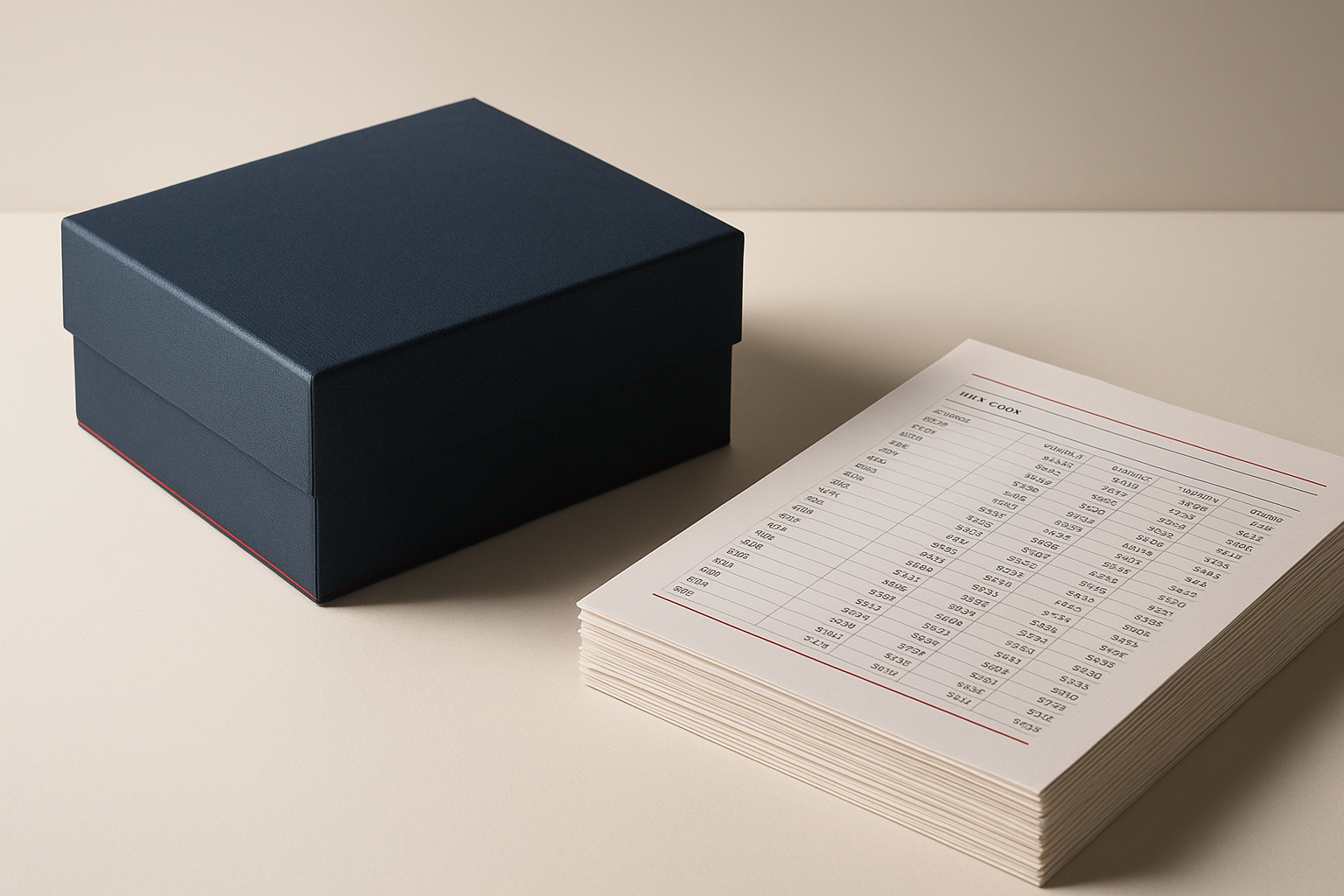
Two constructions cover almost every advent calendar we produce through our Custom Packaging Manufacturing service. Rigid boxes are the premium format you see from beauty and spirits brands: a wrapped greyboard shell with 24 die-cut doors and, usually, a tray inside. Folding cartons are lighter, ship flat, and suit chocolate, tea, and toy calendars where the unit economics are tighter.
| Construction | Price per unit at 1,000 pcs | MOQ | Production lead time |
|---|---|---|---|
| Rigid box, 24 doors, wrapped greyboard | $2.80 to $6.50 | 500 pcs | 18 to 25 days |
| Folding carton, 24 doors, litho-printed | $1.20 to $2.50 | 1,000 pcs | 18 to 25 days |
Two add-ons appear on almost every quote we send:
- Foil-stamped door numbers: add $0.15 to $0.30 per unit. Worth it for retail, skippable for corporate gifting.
- Vacuum-formed trays: add $0.30 to $0.80 per unit depending on cavity count and plastic gauge.
What drives the price
Board weight and structure
This is where advent calendars punish corner-cutting. A filled beauty calendar weighs 0.8 to 1.5 kg once your 24 products are inside, so we spec the base board at 2mm greyboard or thicker. A thinner base bows on the shelf under that load, and a bowed calendar at a department store is a chargeback waiting to happen. The board spec alone can swing the rigid price band by a dollar.
The 24 doors
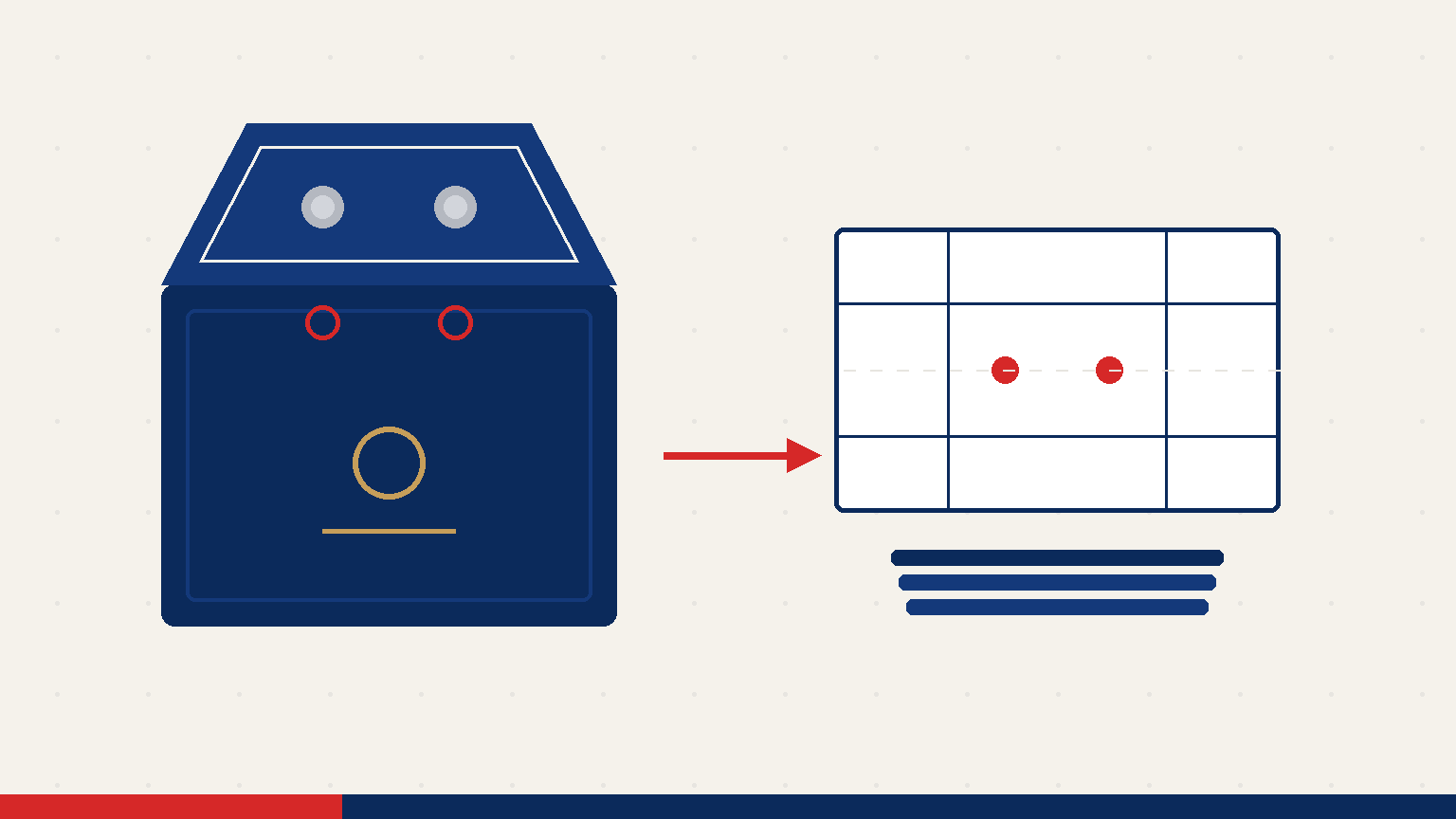
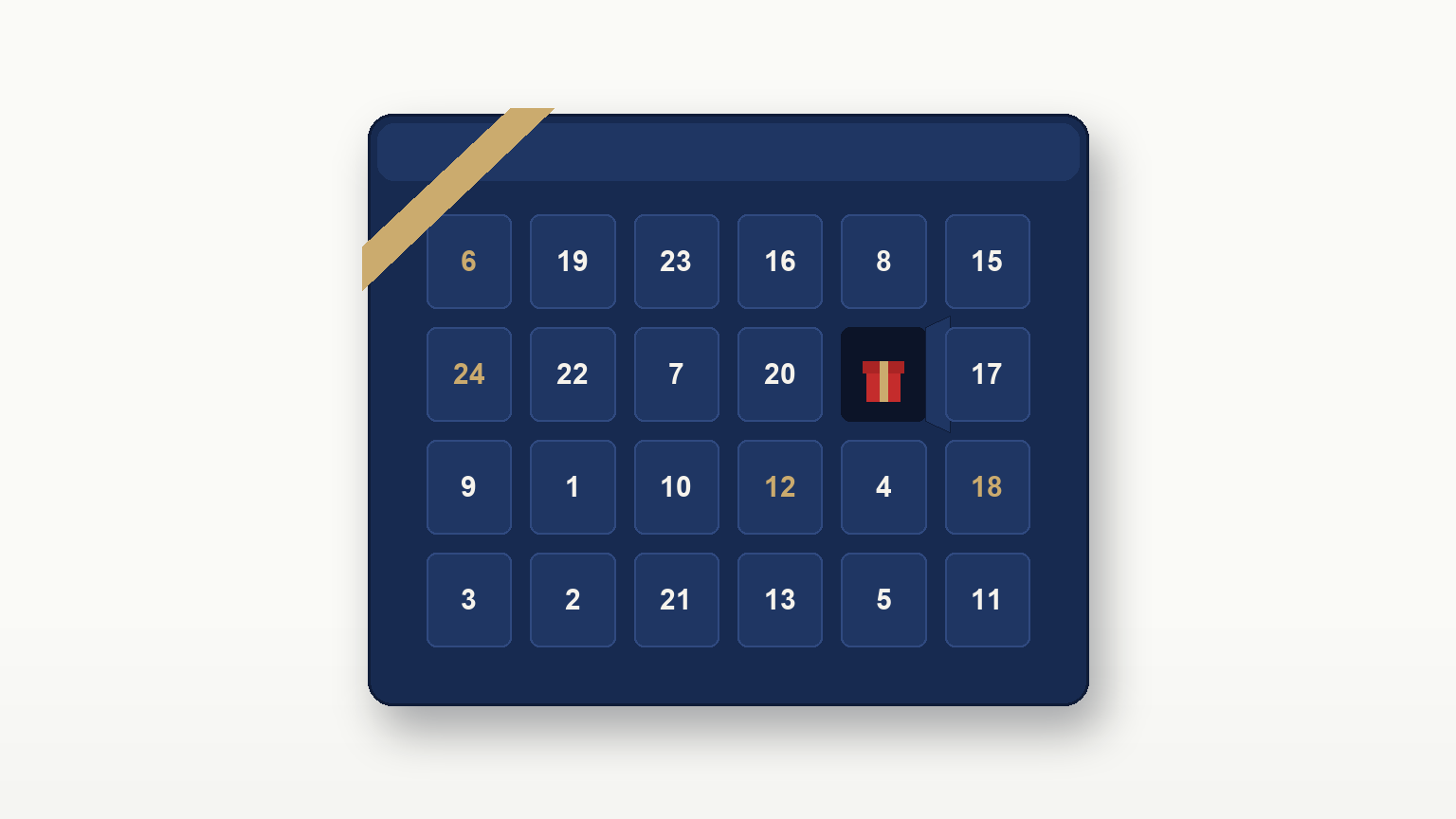
Each door is die-cut with a perforated hinge, and the die for a 24-door face is far more complex than a standard box blank. On rigid builds the doors sit in a printed front panel that's mounted over the tray, and alignment between door and cavity has to be tight. Foil numbering the doors adds that $0.15 to $0.30 per unit, mostly in press time.
Trays and inserts
Chocolate calendars almost always need a vacuum-formed tray. Beauty calendars with glass jars definitely do. If your 24 items are uniform and light, a printed paper divider can do the job for less. We'll tell you honestly which one your product needs; upselling a tray nobody needs is how factories lose repeat customers.
Finish level
Soft-touch lamination, spot UV on the doors, and metallic wrap papers all push a rigid calendar toward the top of the $2.80 to $6.50 band. Our opinion after decades of gift packaging: spend on the door numbering and the wrap paper, save on interior print nobody photographs.
If you'd rather skip the reading and just price your own spec, our studio design and instant quote tool lets you configure a calendar and see numbers in minutes instead of waiting on an email thread.
The Christmas deadline, worked backwards
Here's the math that matters more than the price. Say you need stock in your warehouse by November 15 to hit retail shelves and early December orders:
- Sea freight is 25 to 35 days. Your cargo needs to leave China by mid-October.
- Production is 18 to 25 days. We need approved artwork and your deposit by mid-September.
- Sampling adds a buffer. If you want a physical pre-production sample first, and you should, start the conversation in August.
That's why we tell every client the same thing: mid-September artwork approval is the real Christmas deadline for sea freight. Air freight takes 5 to 8 days and can rescue a late project, but rigid advent calendars are bulky, they don't fold flat, and air rates on that volume routinely erase the margin on the calendar itself. Every year someone calls us in late October hoping we can bend physics. We can compress production a few days. We can't move the ocean.
Wholesale quantities: where the price breaks
The bands above are quoted at 1,000 pieces, which is where most first orders land. The steepest per-unit drop happens between the MOQ and about 2,000 units, because the die, the printing plates, and the tray mold are fixed costs being spread across more boxes. Past 5,000 units the curve flattens and further savings come mainly from material buying. If you're weighing 1,000 against 2,000 pieces, ask for both tiers side by side. The gap is usually bigger than buyers expect, and we'd rather show you the table than have you guess.
One more honest note on wholesale pricing: quotes you see advertised well below $1.20 for a 24-door folding calendar usually mean thinner board, unprinted interiors, or doors that are scored rather than cleanly perforated. There's always a reason. Ask what it is.
Frequently asked questions
How much do custom advent calendar boxes cost per unit?
At 1,000 pieces, a rigid 24-door advent calendar box runs $2.80 to $6.50 per unit from our factory, and a folding carton version runs $1.20 to $2.50. Where you land inside those bands depends on board weight, finishes, and whether you need an internal tray.
What is the minimum order quantity for advent calendar boxes wholesale?
Our MOQ is 500 pieces for rigid advent calendars and 1,000 pieces for folding carton versions. Below those quantities the tooling and setup costs push the per-unit price to a level we don't think is fair to charge.
How long do custom advent calendar boxes take to produce and ship?
Production takes 18 to 25 days after artwork approval. Sea freight adds 25 to 35 days depending on destination port, while air freight takes 5 to 8 days but costs several times more.
When is the deadline to order advent calendars for Christmas?
For sea freight delivery, your artwork needs to be approved by mid-September. That leaves 18 to 25 days for production and 25 to 35 days on the water, landing stock in your warehouse in November. Miss that window and air freight becomes your only option.
Do I need a vacuum-formed tray inside the calendar?
If your products are glass, heavy, or irregularly shaped, yes. A vacuum-formed tray adds $0.30 to $0.80 per unit and holds each item in its cavity. A filled beauty calendar weighs 0.8 to 1.5 kg, so we also spec the base board at 2mm or thicker to stop the box from bowing.
Ready to get specific? Start with our advent calendar packaging guide for structures and layouts, then build your own spec in the studio quote tool for live pricing. And if you'd like to see everything else we print, here's an overview of our full printing capabilities. September comes around faster than you think.