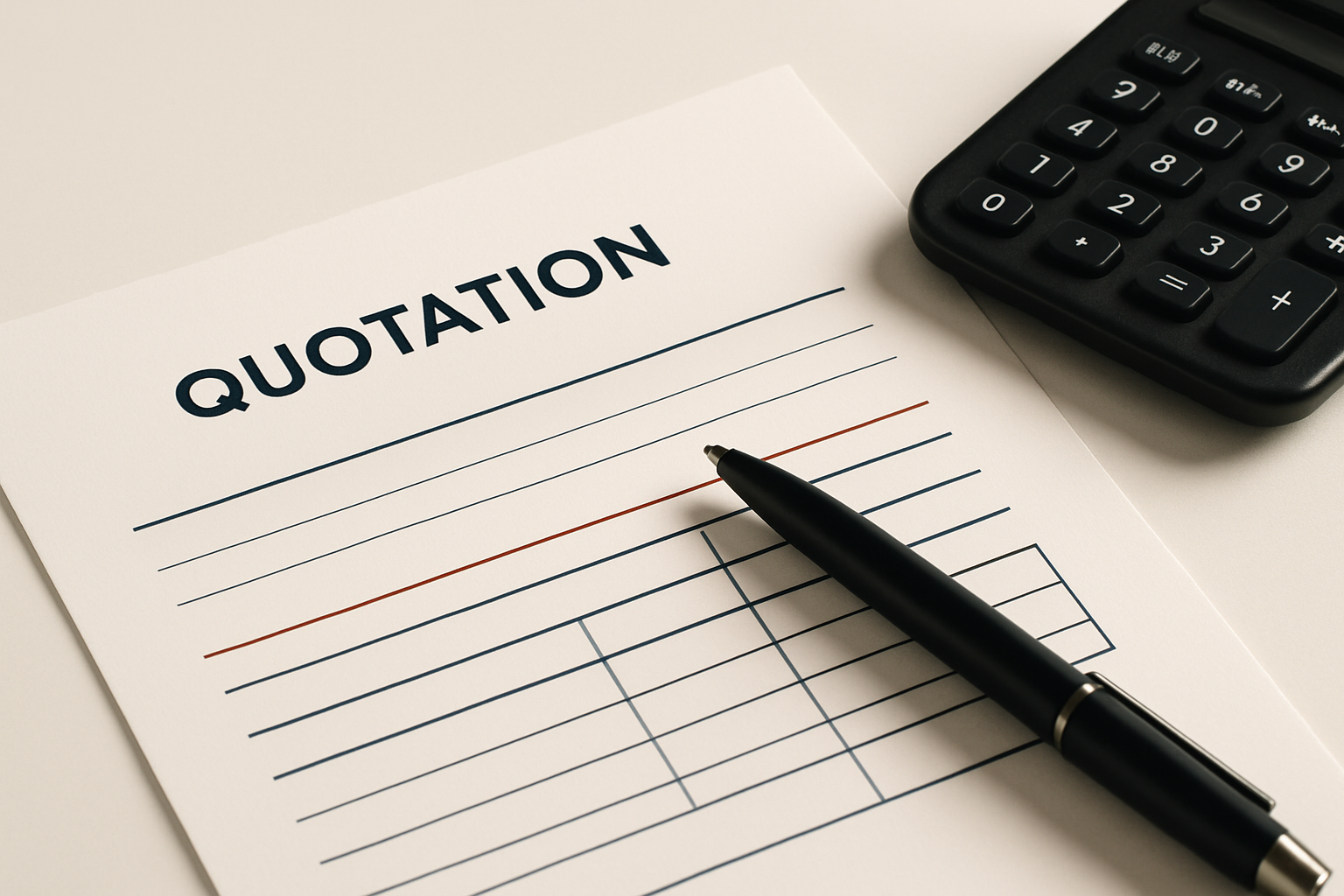
Reading a Chinese factory quotation for the first time can be genuinely confusing, especially if you're not used to the terminology we use on the manufacturing side. We've been producing these documents since 1976, and honestly, even experienced buyers sometimes come back with questions. At Leader Printing, we'd rather you understand every line than sign off on something that surprises you later. So let's walk through a typical packaging quote, piece by piece.
Basic Quotation Structure
A typical quotation from our Custom Packaging Manufacturing service covers several distinct sections. Each one exists for a reason. Here's how they're usually laid out, and what you're actually looking at when you read them:
Header Information
This is your reference block: the date, quotation number, and validity period. Don't overlook the validity period. Commodity prices shift, and a quote we issue today may not hold in 90 days if kraft board or Sun Chemical ink costs move. In our experience, 30 days is the standard validity window for most of our quotes, though we'll always try to honour pricing where we can.
Product Description
This is where we get specific. Dimensions, material callouts, surface treatments, everything. A typical line might read: "Rigid box, 300mm x 200mm x 100mm, 800gsm greyboard, 350gsm coated art paper, soft-touch lamination." If something looks vague here, ask us to clarify before anything else. In our experience, clients sometimes approve a quote without querying the material spec, only to realize later they assumed a matte lamination when we had quoted gloss. We always recommend confirming these details before plates are made.
Material Costs
This section breaks out the raw material costs embedded in your per-unit price. It's worth understanding each line because this is usually where the biggest cost levers are.
Paper Stock
We'll specify the type and weight of paper: something like "FSC-certified 800gsm greyboard" for the inner structure, or "350gsm coated art paper" for the outer wrap. GSM weight affects rigidity, tactile feel, and cost. It also affects sustainability credentials, which matters more and more to European and North American buyers. Between you and me, spec'ing the right greyboard weight upfront saves more revision time than almost anything else.
Inks and Finishes
Inks are called out by colour matching system, Pantone or CMYK, and we'll note the ink supplier where relevant. We run DIC and Sun Chemical inks depending on the job and substrate. Finishes like foil stamping, spot UV, and soft-touch lamination are itemised separately because they each carry their own tooling and material cost. A quote that bundles all of this into a single line is a quote worth querying.
Printing and Production Costs
This section covers the actual press work. We run Heidelberg Speedmaster XL106 offset presses for the bulk of our commercial sheet work. High-register jobs, tight colour, fine screen printing, that is where the XL106 earns its place on the floor. The quote will indicate the press type and configuration where it's relevant to your job.
Setup and Plate Costs
These are one-time charges. We make the plates, set the press, run colour proofs, and get approval before the production run starts. Fixed cost regardless of order size. On a 500-unit run they hit hard per unit. On a 50,000-unit run, they're almost invisible. That's just the nature of offset.
Run Costs
Run costs are where economies of scale really show up. The press runs, paper feeds through, and cost accumulates by the hour. Larger orders spread that press time cost across more units. The short answer is: if you're on the fence between 5,000 and 10,000 units, the per-unit cost difference is often more significant than buyers expect. We're always happy to show you the tiered pricing side by side.
Assembly and Finishing
Printed sheets don't become boxes by themselves. Cutting, scoring, folding, gluing, and any special assembly all have their own cost lines here.
Manual Assembly
Complex packaging, think magnetic closure rigid boxes or multi-component gift sets, requires hand assembly. It's labour-intensive and the cost reflects that. We'll always describe exactly what "manual assembly" covers in our quotes. For many rigid gift box orders, a manual ribbon-tuck step alone can account for a significant portion of the per-unit assembly cost. This is worth knowing upfront.
Automated Processes
Simpler folding cartons and standard boxes run through our Bobst die-cutter and auto-gluer lines. Faster, lower labour cost, and that saving comes through in the quote. If your structure permits automation, we'll route it that way.
Packing and Shipping
Production finished, quality checked, now your order needs to get to you. This section covers both export packing and freight.
Packing Materials
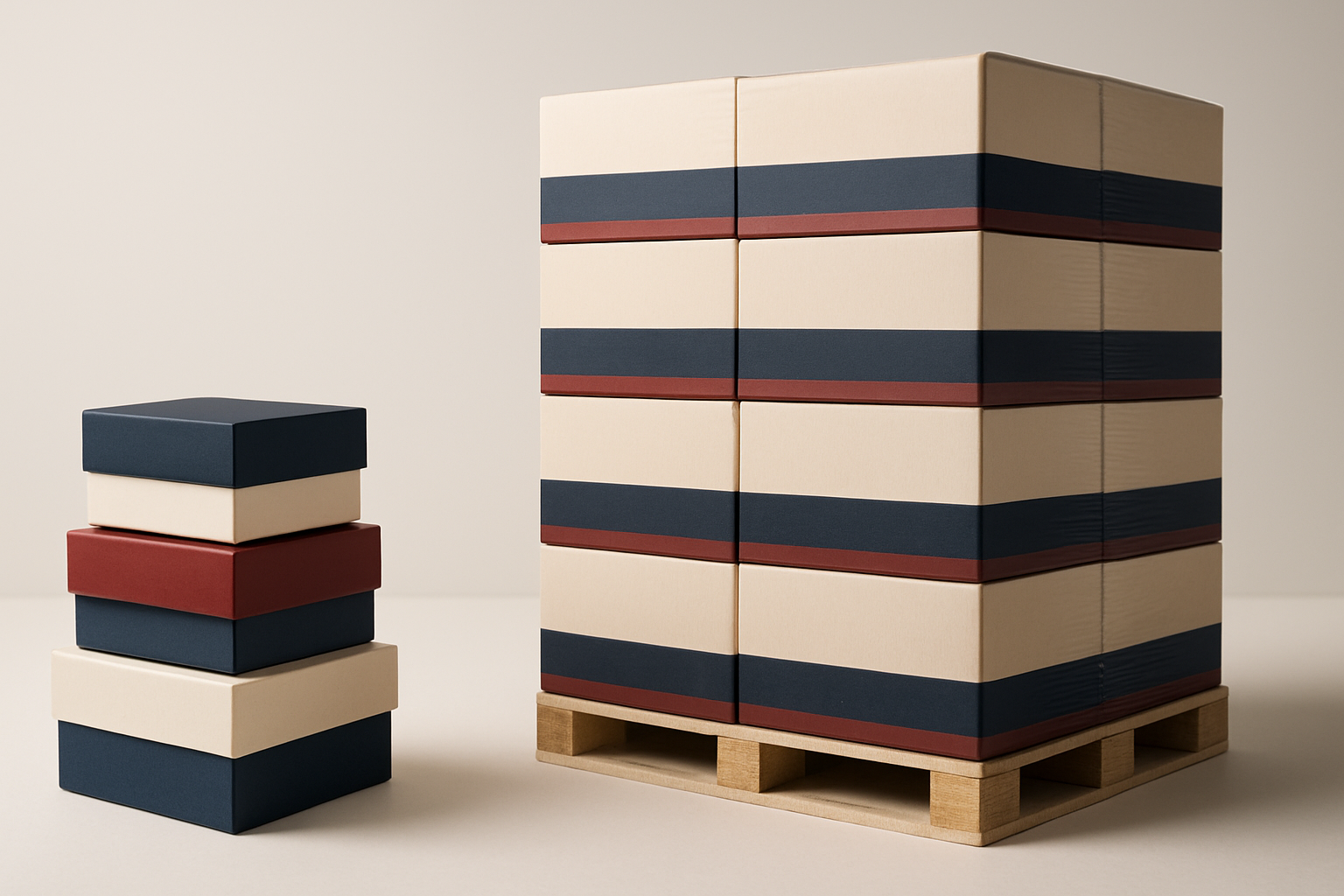
We'll detail the export carton spec, corrugated carton grade, pallet configuration, and any special inner packing requirements. Foil-stamped or soft-touch finishes need careful inner wrapping to avoid scuffing. We don't skip that step, and we don't hide the cost of it either.
Shipping Costs
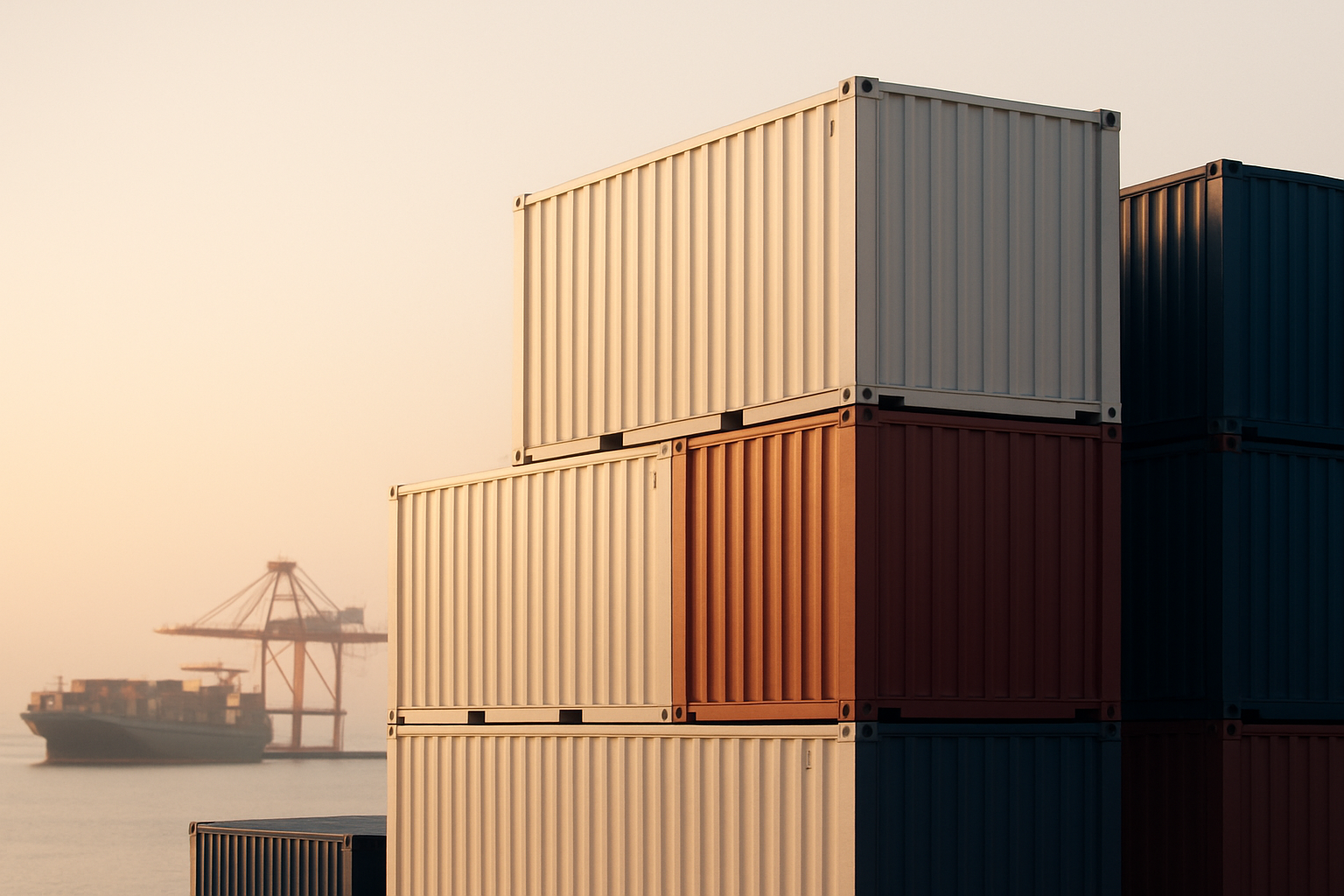
We quote FOB Fuzhou as our standard. CIF is available if you prefer us to arrange freight. Costs are calculated on destination port, shipping method (sea LCL, sea FCL, or air), and carton cubic volume. For most orders, sea freight out of Fuzhou to European or North American ports is straightforward. Air is there for urgent jobs, but the cost jump is significant.
Additional Charges
Beyond the standard production and freight lines, there are a few additional charges that can appear depending on your job.
Custom Design Fees
If you come to us with a brief rather than finished artwork, our design team can develop the structural dieline and surface graphics. That work carries a design fee, which we'll itemise clearly. It's not a large number for most projects, and honestly, having us build the dieline from the start often prevents fit and tolerance issues down the line.
Rush Orders
Our standard production lead time runs 12 to 25 days depending on complexity and current floor capacity. Need it faster? We can often compress that, but there's a rush premium to cover overtime and schedule priority. We'll always tell you upfront whether a rush timeline is actually achievable before we charge the fee.
Terms and Conditions
The back end of the quote covers the commercial terms. Read this section carefully.
Payment Terms
We typically work on a 30% deposit to release the job to production, with the balance due prior to shipment. This is standard for a manufacturer at our scale. It aligns our commitment to your production slot with your commitment to the order. Both parties know where they stand.
Warranty and Returns
We stand behind what we produce. If something leaves our floor with a defect we caused, we'll make it right. Return and remedy policies are written into the quote terms so there's no ambiguity. We've been doing this long enough to know that clarity on this point up front makes for a much better working relationship.
Frequently asked questions
What is the typical lead time for an order?
Our standard lead time ranges from 12 to 25 days, depending on the complexity and size of your order.
How do material choices affect the cost?
Materials like FSC-certified stocks or special finishes such as foil stamping will add to the cost, but they also enhance the quality and sustainability of the product. In our experience, clients who invest in the right material spec at the quote stage don't come back asking for cost reductions later.
Can I get a prototype before placing a large order?
Yes, we can provide prototypes. There may be a nominal fee depending on the complexity, but it's genuinely worth it. You'll see exactly how the structure performs, how the finish reads in person, and whether the dimensions work for your product before a full production run is committed.
How are shipping costs calculated?
Shipping costs are based on the destination port, shipping method (air or sea), and order volume in cubic metres. We provide detailed freight breakdowns so you can compare FOB and CIF options and choose what works for your logistics setup.
For a complete overview of our full printing capabilities, or to talk through your specific project, don't hesitate to reach out. We're here to help guide you through every step of the process.