Food-grade paper bags are one of the more demanding product categories we run at our Fuzhou factory. The compliance side alone, FDA, EU regulations, material traceability, can trip up even experienced procurement teams if they haven't sourced this format before. Add in coating choices and ink restrictions, and there's a lot to get right before you ever run a production batch.
Compliance Standards for Food-Grade Paper Bags
Compliance isn't optional here. It's the whole foundation. We manufacture food-grade bags to meet both FDA requirements and EU material safety standards, and those two frameworks aren't always identical, so you do need to know which markets you're shipping into.
FDA Compliance
For a FDA compliant paper bag, the core rule is straightforward: no harmful substances can migrate from the packaging material into the food. We source FDA-approved kraft paper and only apply coatings that have cleared FDA testing for direct food contact. Honestly, this is where cheap sourcing decisions come back to bite brands. Cutting corners on substrate quality to save a few cents per unit isn't worth the liability exposure.
EU Regulations
EU standards run parallel to FDA but put heavier emphasis on material origin and recyclability. We use FSC-certified paper to satisfy the traceability requirements, and our coatings are selected to meet EC framework regulations on food contact materials. If you're selling into Germany, France, or the UK market, you'll want to confirm coating type early in the spec process.
Coating Options for Food Safety
The coating determines how the bag handles moisture, grease, and temperature. Pick the wrong one and you'll get structural failure at the worst possible moment, usually somewhere in the supply chain. Here's how the two main options stack up.
Polyethylene (PE) Coating
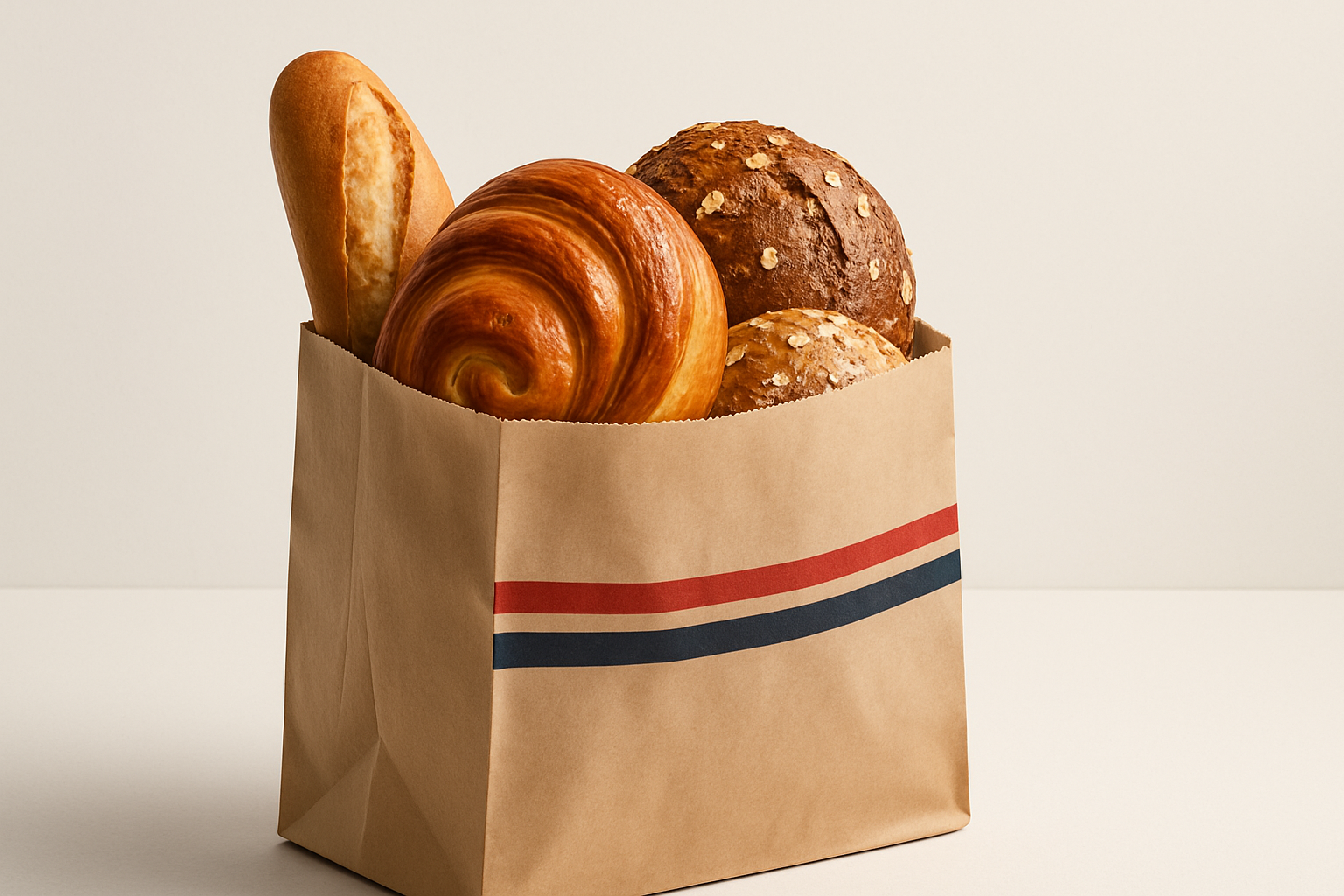
PE coating is the workhorse. It gives you a reliable moisture barrier, it's FDA approved for direct food contact, and it keeps unit costs low. We use it most often for dry goods packaging, bakery items, and light-duty food service applications. It's not compostable, which is a real consideration if your brand has sustainability commitments, but the performance is consistent and the cost is competitive.
Polylactic Acid (PLA) Coating
PLA is the biodegradable option, and demand for it has grown steadily. It gives you moisture resistance comparable to PE but it's compostable in industrial composting conditions. The trade-off is cost. PLA runs higher per unit. In our experience, brands with strong eco-positioning find it worth the premium. Brands chasing the lowest possible landed cost usually don't.
Printing Constraints and Considerations
You can print well on food-grade bags. You just can't print whatever you want with whatever ink you have on hand.
Food-Safe Inks
Food-safe inks are non-negotiable. We run inks that comply with food contact safety standards, formulated so no chemical migration reaches the food. We don't use solvent-based inks on food-grade substrates. That's a firm line we don't cross, regardless of what the design brief calls for.
Design Limitations
Complex artwork is achievable. Full-colour process printing works fine on kraft and white food-grade paper. What you can't do is layer certain decorative finishes, like soft-touch lamination or spot UV, on the interior food-contact surface. Keep those finishes to the exterior only. Your designer should also know that heavy ink coverage on coated surfaces can affect the coating's performance, so we'd recommend keeping large solid fills away from the base panel on flat-bottom bags.
| Coating Type | Moisture Resistance | Eco-Friendliness | Cost |
|---|---|---|---|
| PE | High | Moderate | Low |
| PLA | High | High | Moderate |
Production and Testing Processes
Getting compliant materials is step one. Verifying they stay compliant through production is step two, and it's where a lot of factories fall short.
Material Selection
We work with paper stocks that carry ISO 9001 and FSC Chain of Custody certification. That traceability matters more than it used to. Retailers and food brands increasingly require documented supply chain transparency, and FSC CoC gives you that paper trail from forest to finished bag.
Quality Testing
Every production run goes through burst strength testing, moisture resistance checks, and food safety verification. We back that with SGS reports, which give you independent third-party confirmation rather than just our word for it. The short answer is, if a batch doesn't pass, it doesn't ship. Lead times on food-grade bags run 12-25 days depending on order complexity, and we'd rather hold a shipment than send something that fails your quality inspection.
Sustainability and Environmental Impact
Sustainable food packaging isn't a marketing angle anymore. It's a procurement requirement for a growing number of retail buyers and foodservice operators. We've built our material sourcing around that reality.
FSC Certification
FSC-certified paper means the fibre originates from responsibly managed forests with verified chain of custody. It's the credible standard. We don't offer FSC as an upsell. It's built into our standard material sourcing for food-grade runs because that's what serious buyers expect.
Compostable Options
Our PLA-coated bags give brands a genuinely compostable alternative to PE-lined packaging. They won't compost in a home bin, to be clear, you'll need industrial composting infrastructure, but for brands operating in markets where commercial composting is accessible, PLA is a solid choice. Pair it with kraft paper stock in the 80-120 gsm range and you've got a bag that holds up and breaks down.
Key takeaways
- FDA and EU compliance sets the floor for food-grade paper bags. Know which markets you're shipping into before you finalise the spec.
- PE coating is the cost-effective moisture barrier. PLA costs more but gives you compostability.
- Food-safe inks are required. Decorative finishes like soft-touch lamination and spot UV belong on exterior surfaces only.
- SGS-verified testing on strength, moisture resistance, and food safety should be standard, not optional.
- FSC CoC certification and compostable coating options aren't extras. They're what buyers at serious food brands are asking for.
Frequently asked questions
What makes a paper bag food-grade?
The substrate, coating, and inks all have to meet food contact safety requirements. That means FDA-approved kraft paper, a compliant coating like PE or PLA, and inks with no harmful migration potential. All three have to work together. You can't have a certified substrate with a non-compliant ink and call it food-grade.
How do you ensure FDA compliance?
We source FDA-approved kraft paper and coatings, and we test each production batch to confirm compliance. SGS reports provide independent verification. We don't rely on supplier declarations alone.
Can you print complex designs on food-grade paper bags?
Yes, full-colour process printing works well on food-grade paper. The constraint is ink type and finish placement. Food-safe inks only, and any lamination or UV finishes go on the exterior surface, not the interior food-contact side.
Are your paper bags environmentally friendly?
We use FSC-certified paper as standard. For brands that need a compostable option, we offer PLA coating in place of PE. That's a meaningful difference, not just a label change.